
Our series exploring Colorado’s state parks continues with State Forest! State Forest State Park is one of the state’s largest parks, featuring over 70,000 acres of forest, mountain peaks, and several lakes at elevations ranging from 8,500 to 13,000 feet.
State Forest State Park is located in north-central Colorado near Walden. The park is part of Colorado’s only state forest, which was established in 1938 after a land exchange between the State Board of Land Commissioners and the U.S. Forest Service. The Colorado State Forest was initially used as a way to generate revenue for the state through logging and grazing leases. As those became less profitable, the state turned their attention to wildlife preservation and recreational uses. The effort to turn the area into a new state park began in the 1960s and came to fruition in 1972, when Colorado State Parks signed a lease to manage the land for public recreation. Today, State Forest State Park is open to a variety of activities including hiking, camping, fishing, wildlife viewing, and OHV riding.
State Forest contains several interesting geologic features, including two sand dune areas. East Sand Dunes Natural Area is the only cold-climate sand dune area in Colorado that is preserved in its natural state. The dunes were formed when wind blew sand from eroding mountain peaks into the Medicine Bow Mountains. When the wind hit the mountains, the sand was deposited at the base of the mountain range, forming the dunes. The dunes found in the North Park Dunes Recreational Area are part of this same dune system but are open for off-highway vehicle recreation. When exploring the park on an OHV, it’s important to keep best practices for OHV safety in mind.
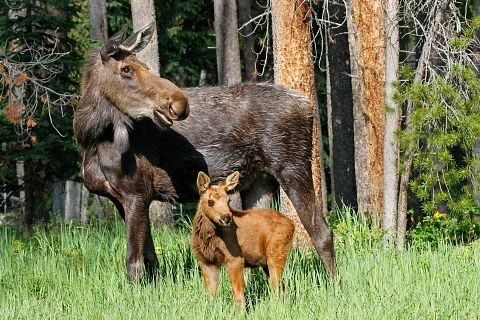
State Forest is also known for superb moose viewing opportunities. North Park, located along State Forest’s western edge, is known as the moose-viewing capital of Colorado. Moose didn’t historically live throughout Colorado; the Division of Wildlife introduced four bull moose and eight cows (with one calf) to North Park in the 1970s. They did very well in the area and in 1997, Colorado Parks and Wildlife opened the Moose Visitor Center to provide education and a wildlife viewing area. Today, there are estimated to be more than 3,000 moose living throughout the state’s forests and marshy areas. To learn more about moose in Colorado, check out the Moose on the Loose fact sheet, available in our digital collection.

- Impact of wildfire smoke on Colorado’s air quality - June 12, 2026
- Colorado State Parks: Staunton - May 29, 2026
- West Salt Creek Landslide - May 15, 2026