
Colorado summers are often marked by smoky skies from wildfires burning in-state and in other parts of western North America. While most wildfires occur naturally and are part of normal ecological processes, climate change has increased wildfire frequency and with it, the number of days that humans and animals are left dealing with the impact of lingering wildfire smoke.
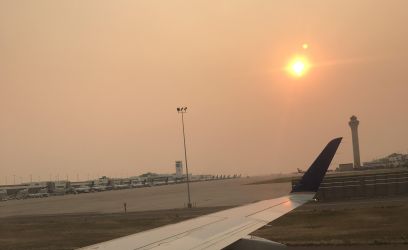
Wildfire smoke contains gases and tiny particles from plants, buildings, and other materials burned in the fire. The tiny particles, also called PM2.5, are the biggest health concern. When the amount of fine particles or other pollutants reaches a high enough concentration, the Colorado Department of Public Health (CDPHE) will declare an air quality Action Day. Action Days mean that the air quality is either Unhealthy or Unhealthy-for-Sensitive-Groups. These categories are based on the Air Quality Index (AQI), which reports concentrations of different pollutants. An AQI of over 100 means that at least one pollutant exceeds state and federal standards for healthy air quality. CDPHE’s daily AQI updates and the Colorado Smoke Blog are great resources to stay aware of regional air quality and track the presence of wildfire smoke around the state.
According to CDPHE’s wildfire smoke resources page, the fine particles in wildfire smoke can cause health problems by irritating and inflaming the respiratory system. Those exposed to smoke might experience coughing, difficulty breathing, itchy eyes, and impacts to mental health. Wildfire smoke can also exacerbate symptoms for people with pre-existing respiratory conditions, like asthma and bronchitis. Other high-risk groups include children, the elderly, pregnant people, and those without reliable access to healthcare.
Since occasional wildfire smoke is a part of life in Colorado, it helps to be prepared when it arrives. A few state agencies have published recommendations to help Coloradans limit their exposure:
- Reduce your smoke exposure (CDPHE)
- Indoor air quality after a fire (CDPHE)
- Protect your lungs from wildfire smoke (CDPHE)
- Wildfire Smoke: Safety Guidance for State Agencies & Employees (State Office of Risk Management)
- Protecting your home from wildfire (Colorado State Forest Service)

- Colorado’s Scenic and Historic Byways: Mount Blue Sky - July 15, 2026
- Impact of wildfire smoke on Colorado’s air quality - June 12, 2026
- Colorado State Parks: Staunton - May 29, 2026