
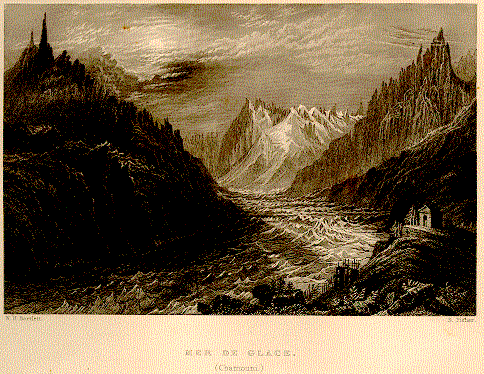
“From the side where I now stood Montanvert was exactly opposite, at the distance of a league; and above it rose Mont Blanc, in awful majesty. I remained in a recess of the rock, gazing on this wonderful and stupendous scene. The sea, or rather the vast river of ice, wound among its dependent mountains, whose aerial summits hung over its recesses. Their icy and glittering peaks shone in the sunlight over the clouds. My heart, which was before sorrowful, now swelled with something like joy; I exclaimed, ‘Wandering spirits, if indeed ye wander, and do not rest in your narrow beds, allow me this faint happiness, or take me, as your companion, away from the joys of life.’” – Frankenstein, by Mary Shelly
Pathetic fallacy is a common literary device of (broadly speaking) giving inanimate things (such as weather or even nature itself) human attributes or emotions. A type of personification, pathetic fallacy is often used to illustrate a mood or allude to drama or subtext. In the quote above, Victor Frankenstein encounters the “awful majesty” of the “dependent mountains” overwhelming and threatening him, alluding to the central conflict of the novel. His brief joy embodied in ethereal clouds, comes before the terrifying image of his own “dæmon” creation “advancing towards [him] with superhuman speed.” As we delve into the coldest months, how might we derive inspiration and resilience from books that deal with nature’s harshness? This post is a twist on one from last year all about cozy books for book clubs, some of which are also set in wintery places. With this post, however, we are focused more on suggested book club titles that evoke a wintery feeling. As we await the winter solstice and brighter days, so do the characters in these stories, instructing us with lessons of endurance and perhaps reminding us that even the iciest of days contain a promise of spring.
The Call of the Wild, by Jack London | Discussion Questions
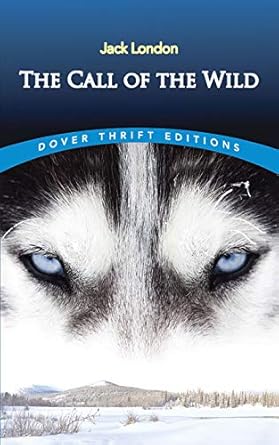
The Call of the Wild, considered by many to be Jack London’s greatest novel, is a gripping survival story of a heroic dog that, thrust into the brutal life of the Alaska Gold Rush, ultimately faces a choice between living in man’s world and returning to nature. The domesticated life of a powerful St. Bernard-Shepherd mix named Buck is quickly turned on end when he is stolen away from his master and put to work as a sled dog in Alaska. His once life of luxury turns into a life of survival and adaptation as he learns the ways of the wilderness. Adventure and animal-story enthusiasts as well as students and devotees of American literature will find this classic work a thrilling, memorable reading experience.
The Left Hand of Darkness, by Ursula K. Le Guin | Discussion Questions
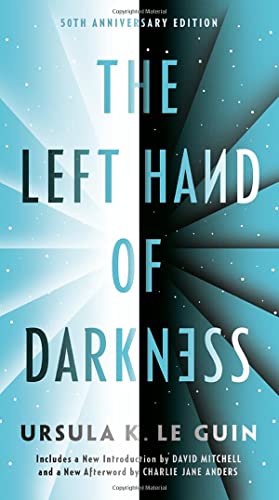
A lone human ambassador is sent to the icebound planet of Winter, a world without sexual prejudice, where the inhabitants’ gender is fluid. His goal is to facilitate Winter’s inclusion in a growing intergalactic civilization. But to do so he must bridge the gulf between his own views and those of the strange, intriguing culture he encounters…
Embracing the aspects of psychology, society, and human emotion on an alien world, The Left Hand of Darkness stands as a landmark achievement in the annals of intellectual science fiction.
Cold the Night, Fast the Wolves, by Meg Long | Discussion Questions
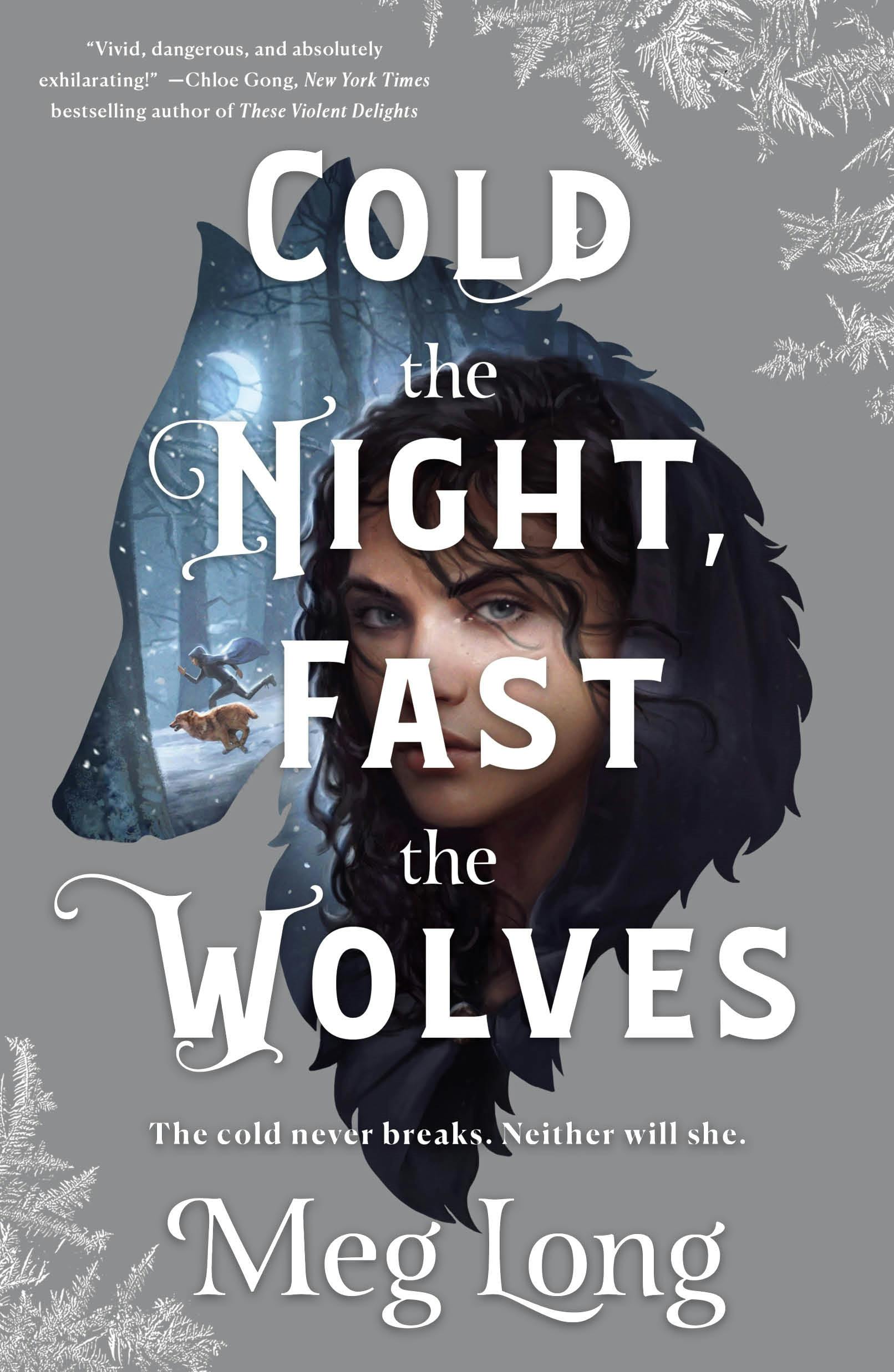
Seventeen-year-old Sena Korhosen hates the sled race, especially after it claimed both her mothers’ lives five years ago. Alone on her frozen planet, she makes money any other way she can–until she double-crosses a local gangster.
Desperate to escape, Sena flees with his prized fighting wolf, Iska, and takes an offer from a team of scientists. They’ll pay her way off-world, on one condition–that she uses the survival skills her mothers taught her to get them to the end of the race. But the tundra is a treacherous place. When the race threatens their lives at every turn, Sena must discover whether her abilities are enough to help them survive the wild, and whether she and Iska together are strong enough to get them all out alive.
As the girl and the wolf forge a tenuous bond and fight to escape ice goblins, giant bears, and the ruthless gang leader intent on trapping them both, one question drives them relentlessly forward: Where do you turn when there is nowhere to hide?
Night of the Living Rez, by Morgan Talty | Discussion Questions
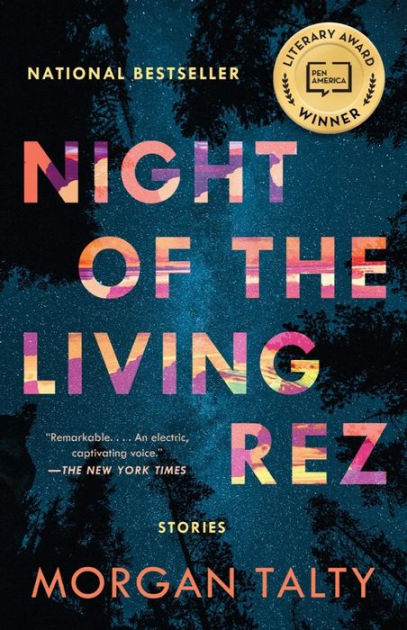
Set in a Native community in Maine, Night of the Living Rez is a riveting debut collection about what it means to be Penobscot in the twenty-first century and what it means to live, to survive, and to persevere after tragedy. In twelve striking, luminescent stories, author Morgan Talty—with searing humor, abiding compassion, and deep insight—breathes life into tales of family and a community as they struggle with a painful past and an uncertain future. A boy unearths a jar that holds an old curse, which sets into motion his family’s unraveling; a man, while trying to swindle some pot from a dealer, discovers a friend passed out in the woods, his hair frozen into the snow; a grandmother suffering from Alzheimer’s projects the past onto her grandson; and two friends, inspired by Antiques Roadshow, attempt to rob the tribal museum for valuable root clubs.
The Winter Soldier, by Daniel Mason | Discussion Questions
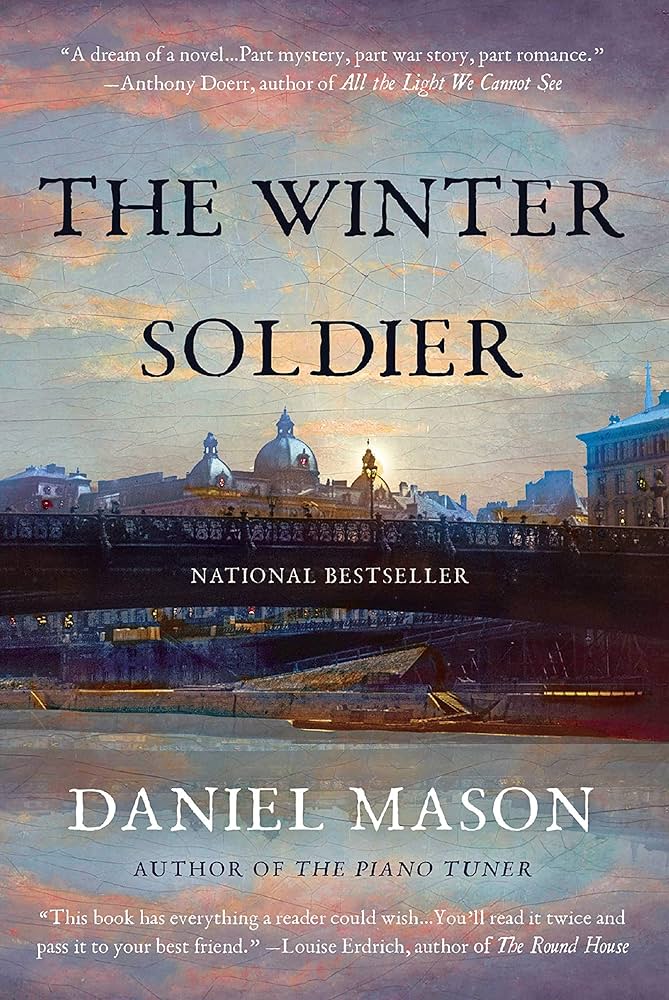
Vienna, 1914. Lucius is a twenty-two-year-old medical student when World War I explodes across Europe. Enraptured by romantic tales of battlefield surgery, he enlists, expecting a position at a well-organized field hospital. But when he arrives, at a commandeered church tucked away high in a remote valley of the Carpathian Mountains, he finds a freezing outpost ravaged by typhus. The other doctors have fled, and only a single, mysterious nurse named Sister Margarete remains.
But Lucius has never lifted a surgeon’s scalpel. And as the war rages across the winter landscape, he finds himself falling in love with the woman from whom he must learn a brutal, makeshift medicine. Then one day, an unconscious soldier is brought in from the snow, his uniform stuffed with strange drawings. He seems beyond rescue, until Lucius makes a fateful decision that will change the lives of doctor, patient, and nurse forever.
From the gilded ballrooms of Imperial Vienna to the frozen forests of the Eastern Front; from hardscrabble operating rooms to battlefields thundering with Cossack cavalry, The Winter Soldier is the story of war and medicine, of family, of finding love in the sweeping tides of history, and finally, of the mistakes we make, and the precious opportunities to atone.
The Winter Army: The World War II Odyssey of the 10th Mountain Division, America’s Elite Alpine Warriors, by Maurice Isserman| Discussion Questions
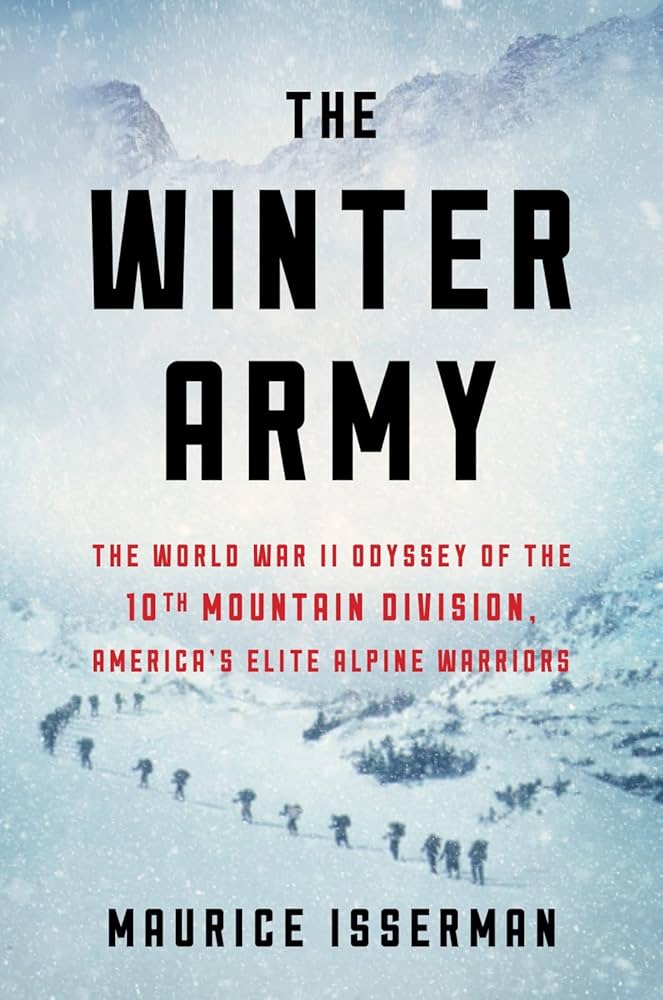
The epic story of the US Army’s 10th Mountain Division, whose elite soldiers broke the last line of German defenses in Italy’s mountains in 1945, spearheading the Allied advance to the Alps and final victory.
At the start of World War II, the US Army had two cavalry divisions—and no mountain troops. The German Wehrmacht, in contrast, had many well-trained and battle-hardened mountain divisions, some of whom by 1943 blocked the Allied advance in the Italian campaign. Starting from scratch, the US Army developed a unique military fighting force, the 10th Mountain Division, drawn from the ranks of civilian skiers, mountaineers, and others with outdoor experience. The resulting mix of Ivy League students, park rangers, Olympic skiers, and European refugees formed the first specialized alpine fighting force in US history. By the time it deployed to Italy at the beginning of 1945, this ragtag group had coalesced into a tight-knit unit. In the months that followed, at a terrible cost, they spearheaded the Allied drive in Italy to final victory.
Ranging from the ski slopes of Colorado to the towering cliffs of the Italian Alps, The Winter Army is a saga of an unlikely band of soldiers forged in the heat of combat into a brotherhood whose legacy lives on in US mountain fighters to this day.
The Coldest Winter Ever, by Sister Souljah | Discussion Questions
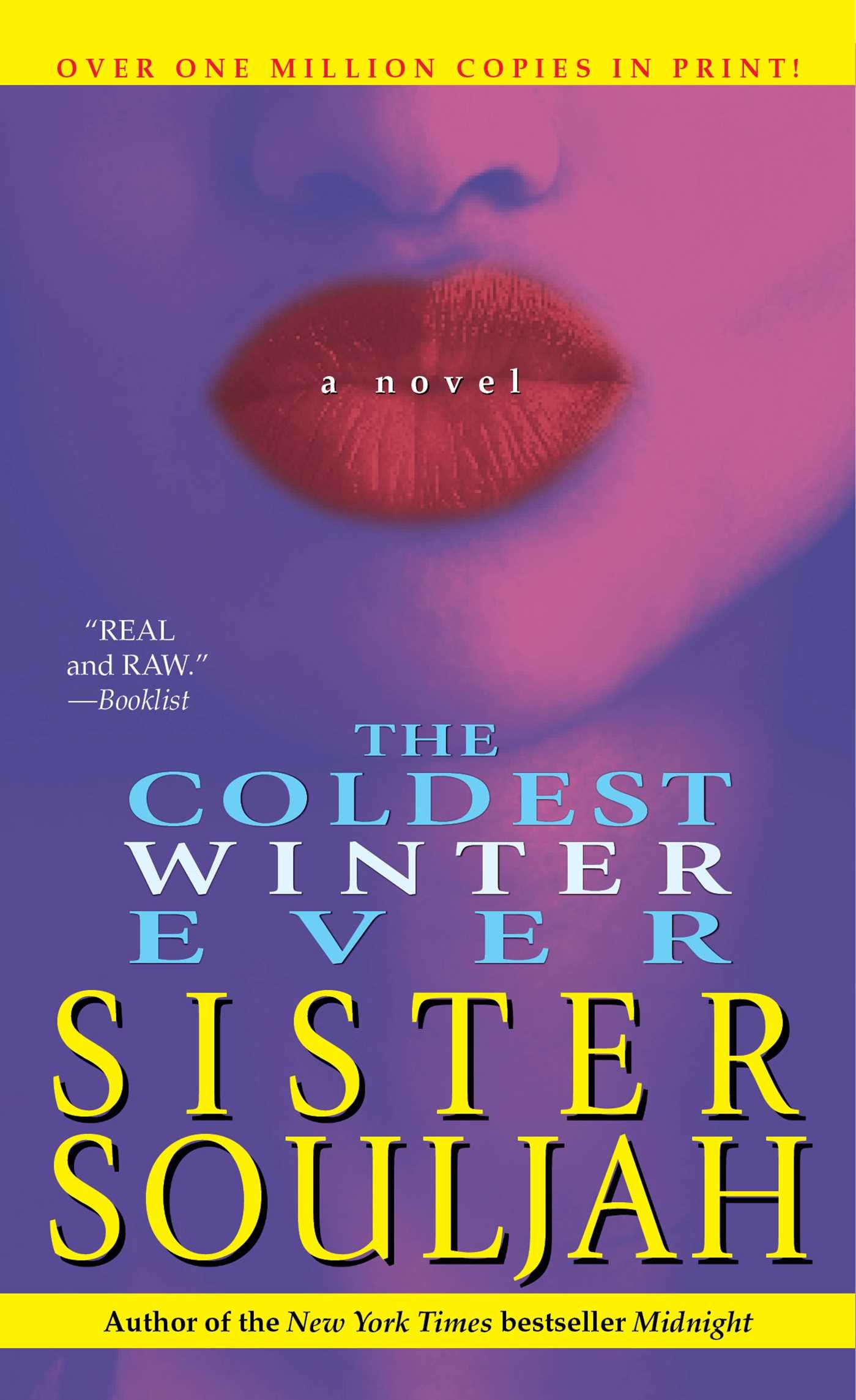
I came busting into the world during one of New York’s worst snowstorms, so my mother named me Winter.
Ghetto-born, Winter is the young, wealthy daughter of a prominent Brooklyn drug-dealing family. Quick-witted, sexy, and business-minded, she knows and loves the streets like the curves of her own body. But when a cold Winter wind blows her life in a direction she doesn’t want to go, her street smarts and seductive skills are put to the test of a lifetime. Unwilling to lose, this ghetto girl will do anything to stay on top.
Twenty-five years and over one million copies later, The Coldest Winter Ever is a bestseller and a national treasure, a classic handed down from one reading generation to the next. Whether you are reading it for the first time or have cherished it for years, you will never forget this Winter’s tale.
If On a Winter’s Night A Traveler, by Italo Calvino | Discussion Questions
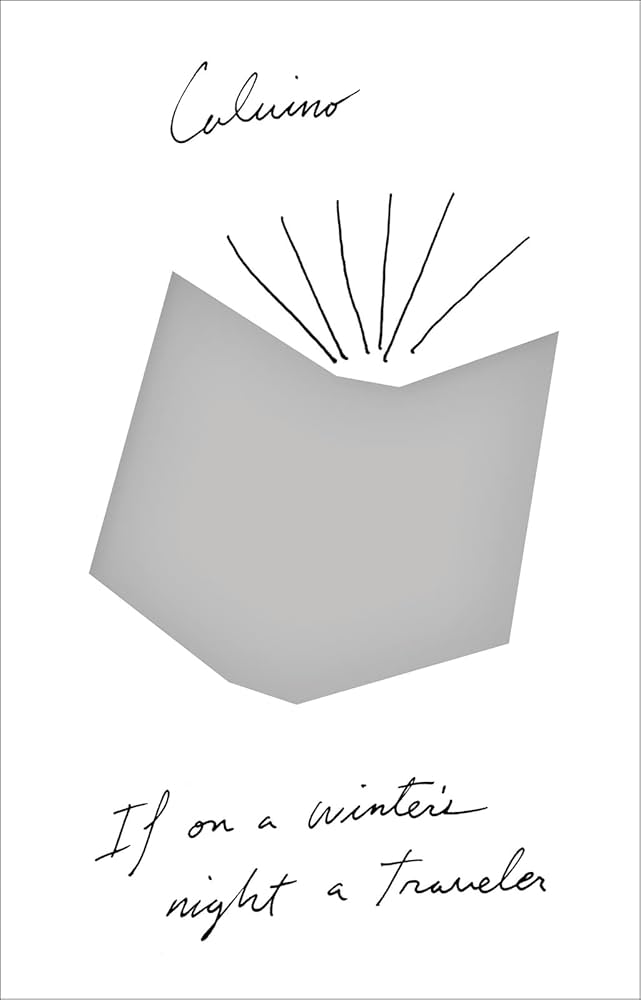
If on a Winter’s Night a Traveler is a feat of striking ingenuity and intelligence, exploring how our reading choices can shape and transform our lives. Originally published in 1979, Italo Calvino’s singular novel crafted a postmodern narrative like never seen before—offering not one novel but ten, each with a different plot, style, ambience, and author, and each interrupted at a moment of suspense. Together, the stories form a labyrinth of literature known and unknown, alive and extinct, through which two readers pursue the story lines that intrigue them and try to read each other. Deeply profound and surprisingly romantic, this classic is a beautiful meditation on the transformative power of reading and the ways we make meaning in our lives.
The Finest Hours: The True Story of the U.S. Coast Guard’s Most Daring Sea Rescue, by Michael J. Tougias & Casey Sherman | Discussion Questions
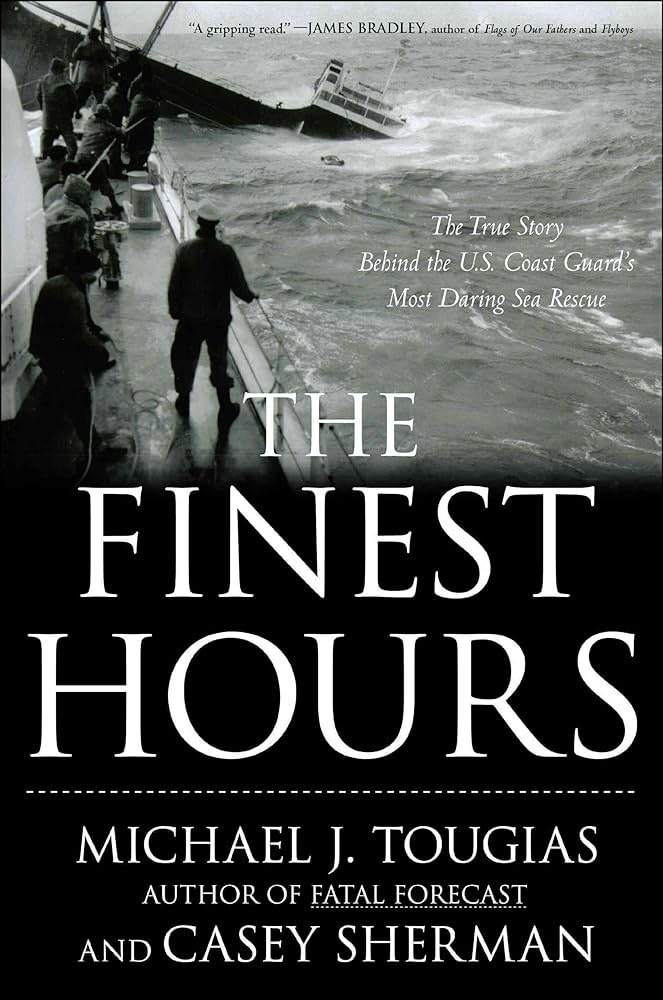
It’s the winter of 1952 and a ferocious Nor’easter is pounding New England with howling winds and seventy-foot seas. Two oil tankers get caught in the violent storm off Cape Cod, its fury splitting the massive ships in two. Back on shore are four young Coast Guardsmen who are given a suicide mission. They must save the lives of the seamen left stranded in the killer storm, and they have to do it in a tiny lifeboat. The crew is led by Bernie Webber, who has to rely on prayer and the courage of his three crewmembers to pull off the impossible. As Webber and his crew sail into the teeth of the storm, each man comes to the realization that he may not come back alive. They’ve lost all navigation and have no idea where the stranded seaman are, and have no idea how to get back home. Whether by sheer luck or divine intervention, the crew stumbles upon the wounded ship in the darkness. More than thirty men appear at the railings of the SS Pendleton, all hoping to be saved. Once again, Webber and his crew face a daunting challenge. How can they rescue all these men with their tiny lifeboat?
Cahokia Jazz, by Francis Spufford | Discussion Questions
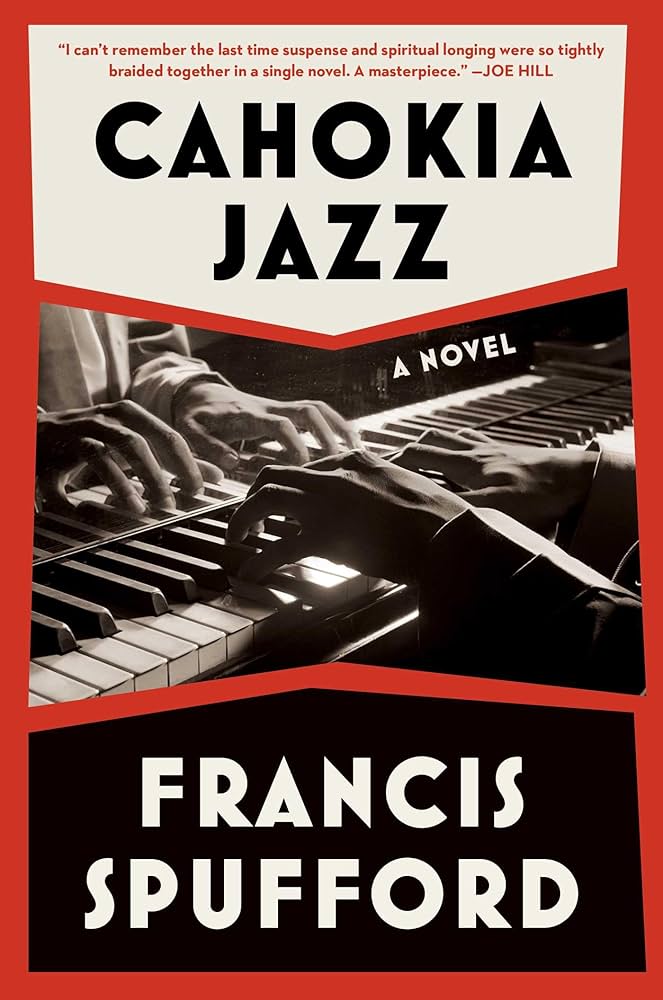
Like his earlier novel Golden Hill, Francis Spufford’s Cahokia Jazz inhabits a different version of America, now through the lens of a subtly altered 1920s—a fully imagined world filled with fog, cigarette smoke, dubious motives, danger, and dark deeds. In the main character of hard-boiled detective Joe Barrow, we have a hero of truly epic proportions, a troubled soul to fall in love with as you are swept along by a propulsive and brilliantly twisty plot.
One snowy night at the end of winter, Barrow and his partner find a body on the roof of a skyscraper. Down below, streetcar bells ring, factory whistles blow, Americans drink in speakeasies and dance to the tempo of modern times. But this is Cahokia, the ancient indigenous city beside the Mississippi living on as a teeming industrial metropolis containing people of every race and creed. Among them, peace holds. Just about. Yet that corpse on the roof will spark a week of drama in which this altered world will spill its secrets and be brought, against a soundtrack of jazz clarinets and wailing streetcars, either to destruction or rebirth.
Migrations, by Charlotte McConaghy | Discussion Questions
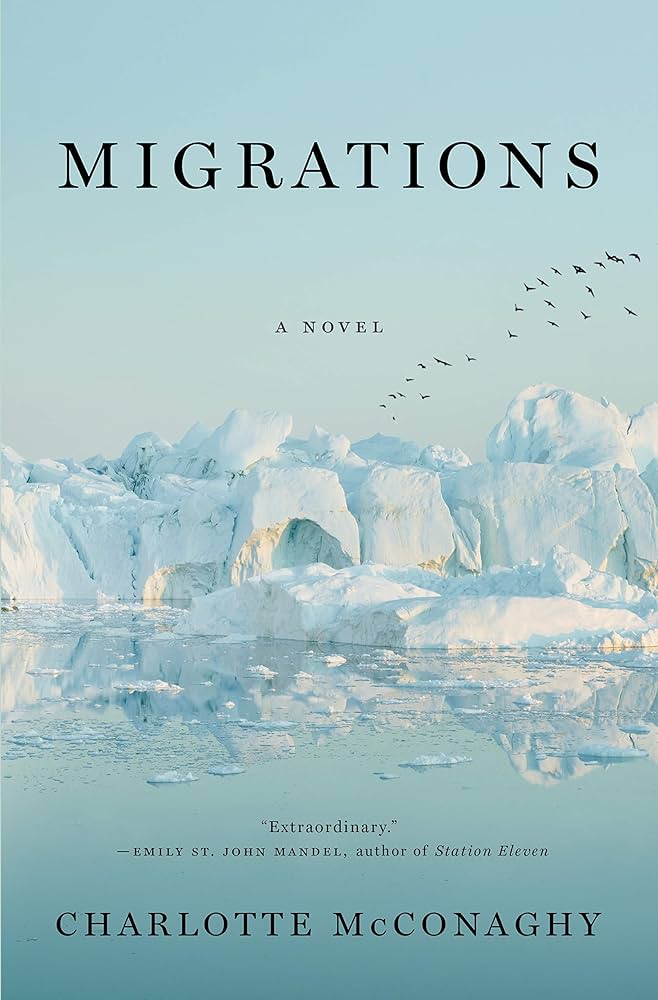
Franny Stone has always been the kind of woman who is able to love but unable to stay. Leaving behind everything but her research gear, she arrives in Greenland with a singular purpose: to follow the last Arctic terns in the world on what might be their final migration to Antarctica. Franny talks her way onto a fishing boat, and she and the crew set sail, traveling ever further from shore and safety. But as Franny’s history begins to unspool―a passionate love affair, an absent family, a devastating crime―it becomes clear that she is chasing more than just the birds. When Franny’s dark secrets catch up with her, how much is she willing to risk for one more chance at redemption?
Epic and intimate, heartbreaking and galvanizing, Charlotte McConaghy’s Migrations is an ode to a disappearing world and a breathtaking page-turner about the possibility of hope against all odds.
The Sun Is a Compass: A 4,000-Mile Journey into the Alaskan Wilds, by Caroline Van Hemert | Discussion Questions
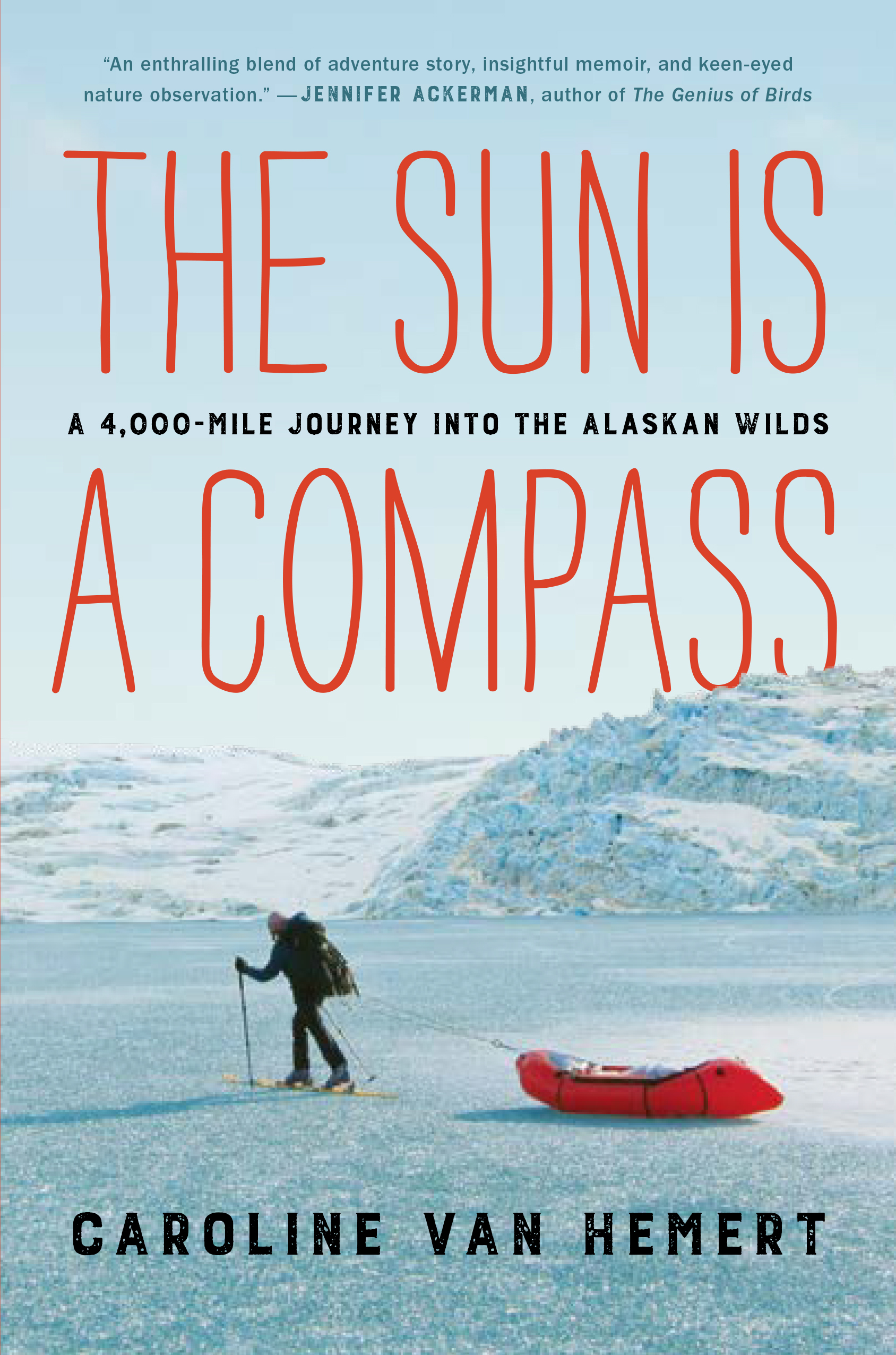
During graduate school, as she conducted experiments on the peculiarly misshapen beaks of chickadees, ornithologist Caroline Van Hemert began to feel stifled in the isolated, sterile environment of the lab. Worried that she was losing her passion for the scientific research she once loved, she was compelled to experience wildness again, to be guided by the sounds of birds and to follow the trails of animals.
In March of 2012, she and her husband set off on a 4,000-mile wilderness journey from the Pacific rainforest to the Alaskan Arctic, traveling by rowboat, ski, foot, raft, and canoe. Together, they survived harrowing dangers while also experiencing incredible moments of joy and grace — migrating birds silhouetted against the moon, the steamy breath of caribou, and the bond that comes from sharing such experiences.
A unique blend of science, adventure, and personal narrative, The Sun is a Compass explores the bounds of the physical body and the tenuousness of life in the company of the creatures who make their homes in the wildest places left in North America. Inspiring and beautifully written, this love letter to nature is a lyrical testament to the resilience of the human spirit.
Woolly: The True Story of the De-Extinction of One of History’s Most Iconic Creatures, by Ben Mezrich | Discussion Questions
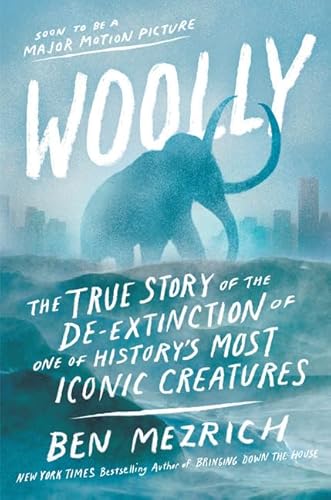
“With his knack for turning narrative nonfiction into stories worthy of the best thriller fiction” (Omnivoracious), Ben Mezrich takes us on an exhilarating true adventure story from the icy terrain of Siberia to the cutting-edge genetic labs of Harvard University. A group of young scientists, under the guidance of Dr. George Church, the most brilliant geneticist of our time, works to make fantasy reality by sequencing the DNA of a frozen woolly mammoth harvested from above the Arctic circle, and splicing elements of that sequence into the DNA of a modern elephant. Will they be able to turn the hybrid cells into a functional embryo and bring the extinct creatures to life in our modern world?
Along with Church and his team of Harvard scientists, a world-famous conservationist and a genius Russian scientist plan to turn a tract of the Siberian tundra into Pleistocene Park, populating the permafrost with ancient herbivores as a hedge against an environmental ticking time bomb. More than a story of genetics, this is a thriller illuminating the race against global warming, the incredible power of modern technology, the brave fossil hunters who battle polar bears and extreme weather conditions, and the ethical quandary of cloning extinct animals. Can we right the wrongs of our ancestors who hunted the woolly mammoth to extinction—and at what cost?
The Great Alone, by Kristin Hannah | Discussion Questions
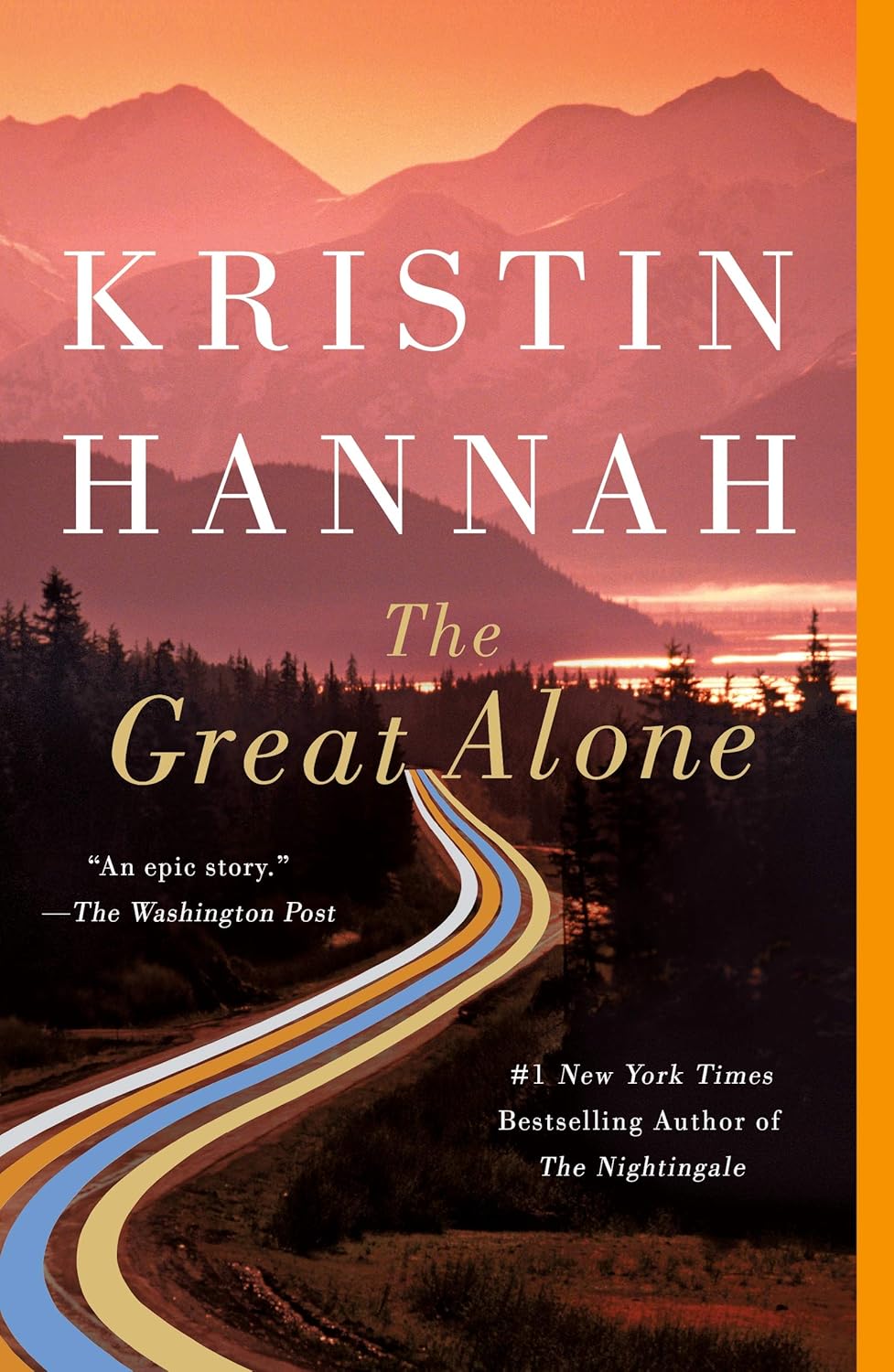
In Kristin Hannah’s The Great Alone, a desperate family seeks a new beginning in the near-isolated wilderness of Alaska only to find that their unpredictable environment is less threatening than the erratic behavior found in human nature.
Alaska, 1974. Ernt Allbright came home from the Vietnam War a changed and volatile man. When he loses yet another job, he makes the impulsive decision to move his wife and daughter north where they will live off the grid in America’s last true frontier.
Cora will do anything for the man she loves, even if means following him into the unknown. Thirteen-year-old Leni, caught in the riptide of her parents’ passionate, stormy relationship, has little choice but to go along, daring to hope this new land promises her family a better future.
In a wild, remote corner of Alaska, the Allbrights find a fiercely independent community of strong men and even stronger women. The long, sunlit days and the generosity of the locals make up for the newcomers’ lack of preparation and dwindling resources.
But as winter approaches and darkness descends, Ernt’s fragile mental state deteriorates. Soon the perils outside pale in comparison to threats from within. In their small cabin, covered in snow, blanketed in eighteen hours of night, Leni and her mother learn the terrible truth: they are on their own.
Frankenstein, by Mary Shelley | Discussion Questions
Few creatures of horror have seized readers’ imaginations and held them for so long as the anguished monster of Mary Shelley’s Frankenstein. The story of Victor Frankenstein’s terrible creation and the havoc it caused has enthralled generations of readers and inspired countless writers of horror and suspense. Considering the gothic novel’s enduring success, it is remarkable that it began merely as a whim of Lord Byron’s.
“We will each write a story,” Byron announced to his next-door neighbors, Mary Wollstonecraft Godwin and her lover, the romantic poet Percy Bysshe Shelley. The illustrious poets failed to complete their ghost stories, but Mary Shelley rose supremely to the challenge. With Frankenstein, she succeeded admirably in the task she set for herself: to create a story that, in her own words, “would speak to the mysterious fears of our nature and awaken thrilling horror — one to make the reader dread to look round, to curdle the blood, and quicken the beatings of the heart.”
Nothing Daunted: The Unexpected Education of Two Society Girls in the West, by Dorothy Wickenden | Discussion Questions

From the author of The Agitators, the acclaimed and captivating true story of two restless society girls who left their affluent lives to “rough it” as teachers in the wilds of Colorado in 1916.
In the summer of 1916, Dorothy Woodruff and Rosamond Underwood, bored by society luncheons, charity work, and the effete men who courted them, left their families in Auburn, New York, to teach school in the wilds of northwestern Colorado. They lived with a family of homesteaders in the Elkhead Mountains and rode to school on horseback, often in blinding blizzards. Their students walked or skied, in tattered clothes and shoes tied together with string. The young cattle rancher who had lured them west, Ferry Carpenter, had promised them the adventure of a lifetime. He hadn’t let on that they would be considered dazzling prospective brides for the locals.
Nearly a hundred years later, Dorothy Wickenden, the granddaughter of Dorothy Woodruff, found the teachers’ buoyant letters home, which captured the voices of the pioneer women, the children, and other unforgettable people the women got to know. In reconstructing their journey, Wickenden has created an exhilarating saga about two intrepid women and the “settling up” of the West.
The Sunlight Pilgrims, by Jenni Fagan | Discussion Questions
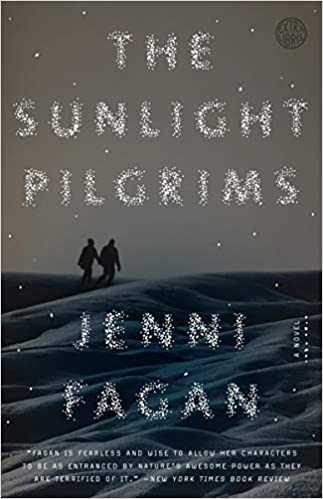
It’s November of 2020, and the world is freezing over. Each day colder than the last. There’s snow in Israel, the Thames is overflowing, and an iceberg separated from the Fjords in Norway is expected to drift just off the coast of Scotland. As ice water melts into the Atlantic, frenzied London residents evacuate by the thousands for warmer temperatures down south. But not Dylan. Grieving and ready to build life anew, he heads north to bury his mother’s and grandmother’s ashes on the Scottish islands where they once lived.
Hundreds of miles away, twelve-year-old Estella and her survivalist mother, Constance, scrape by in the snowy, mountainous Highlands, preparing for a record-breaking winter. Living out of a caravan, they spend their days digging through landfills, searching for anything with restorative and trading value. When Dylan arrives in their caravan park in the middle of the night, life changes course for Estella and Constance. Though the weather worsens, his presence brings a new light to daily life, and when the ultimate disaster finally strikes, they’ll all be ready.
Written in incandescent, dazzling prose, The Sunlight Pilgrims is a visionary story of courage and resilience in the midst of nature’s most violent hour; by turns an homage to the portentous beauty of our natural world, and to just how strong we can be, if the will and the hope is there, to survive its worst.
*
About the Book Club Resource
Book club sets are circulated to participating libraries via the CLiC courier. Read all about the program on the Book Club Resource landing page. If you are interested in receiving book club sets but are not already a member library, use the online form to get signed up.
Since the BCR has always relied on book donations, we are deeply grateful to all the libraries, authors, and organizations that have donated sets and helped make the collection stronger. Please contact [email protected] for questions or to discuss donations.

- New Kits on the Block - June 29, 2026
- Colorado Libraries with Makerspaces - May 15, 2026
- Check Out Colorado State Parks – 2025 Statistical Report - April 30, 2026