
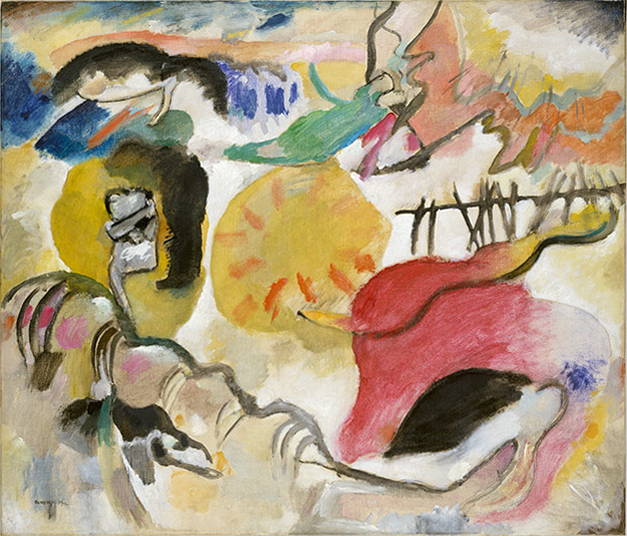
The Modernist literary movement was a radical break from the literary conventions of the past, emerging in the late 19th and early 20th centuries. It was a direct response to the profound societal and cultural shifts of the era, including rapid industrialization, urbanization, and the psychological trauma of World War I. This era of immense change led many writers to believe that the traditional forms and narratives of the 19th century—such as straightforward storytelling, omniscient narrators, and clear moral lessons—were no longer adequate to capture the complexities of modern life.
Modernist authors sought to “make it new,” a famous phrase coined by Ezra Pound, by experimenting with form, language, and perspective. Their work often reflects a sense of disillusionment and fragmentation, rejecting the idea of a stable, ordered reality in favor of exploring the inner, subjective experiences of the individual. Key figures like James Joyce, Virginia Woolf, T.S. Eliot, and Ernest Hemingway revolutionized literature by using techniques like stream of consciousness, fragmented narratives, and multiple perspectives to delve into the psychological landscape of their characters.
Ultimately, Modernism was not a single, unified style but a diverse and international movement that mirrored the intellectual and artistic anxieties of its time. It challenged readers to actively engage with the text, demanding a new kind of attention to its structure and symbolism. Through its bold innovations, the movement laid the groundwork for much of the experimental literature that followed, leaving a lasting legacy on the way we understand and create art.
Key Characteristics of the Modernist Movement
The core tenets of literary modernism include:
- Experimentation: Modernist writers and poets deliberately broke from traditional literary forms. They abandoned linear plots, traditional rhyme schemes, and predictable narrative structures in favor of fragmented narratives, free verse, and unconventional prose.
- Individualism and Subjectivity: The focus shifted from the external social world to the inner life of the individual. Influenced by the psychological theories of Sigmund Freud and Carl Jung, writers explored the complexities of the human mind, consciousness, and the unconscious. This often resulted in a focus on isolated, alienated characters grappling with a sense of disconnection from society and their own selves.
- Rejection of Grand Narratives: Modernists were skeptical of the clear-cut truths and moral certainties found in earlier literature. They questioned societal institutions, religious beliefs, and established values, reflecting a pervasive sense of loss and disillusionment, particularly after the devastation of World War I.
- Innovative Techniques: To capture the fragmented nature of modern reality, authors developed new techniques.
- Stream of Consciousness: A narrative style that mimics the free-flowing thoughts, associations, and emotions of a character’s mind, often without traditional punctuation or logical transitions. James Joyce’s Ulysses and Virginia Woolf’s Mrs. Dalloway are prime examples.
- Allusion and Symbolism: Modernist works are often dense with allusions to classical myths, history, and other literary works. These allusions, along with complex symbolism, created rich layers of meaning and underscored the idea that a coherent past could no longer sustain a fragmented present. T.S. Eliot’s The Waste Land is a masterclass in this technique.
The Modernist movement produced some of the most enduring and important works of the 20th century. We have an fun sampling of authors from this movement in the Book Club Resource collection. For some guidance on where to begin, check out the authors and their works highlighted below.
Djuna Barnes:
Djuna Barnes (1892–1982) was an American writer, artist, and journalist and a significant figure in the Modernist literary movement. She spent time as an expatriate in Paris during the 1920s and ’30s, where she became part of an influential circle of writers and artists.
Barnes is best known for her novel Nightwood (1936), a landmark of Modernist fiction. The book, like much of her work, embodies the key characteristics of the movement, particularly through its experimental prose. She rejected traditional, straightforward narratives, instead crafting a dense, lyrical style that is highly symbolic and fragmented, drawing comparisons to the work of James Joyce.
Her writing is notable for its deep psychological focus, delving into the complex inner lives and emotional states of her characters. Barnes explores universal themes of love, loss, and identity, giving her work a dark, emotional quality.
A key aspect of her literary style was her groundbreaking focus on marginalized subjects. Barnes was a pioneer in openly exploring themes of sexuality, and Nightwood is celebrated for its frank portrayal of queer relationships and non-traditional identities.
Through these innovations, Barnes’s work captured the pervasive disillusionment and alienation of the post-World War I era, reflecting the psychological toll of a world that had lost its old certainties.
Nightwood(1936) / Discussion Questions
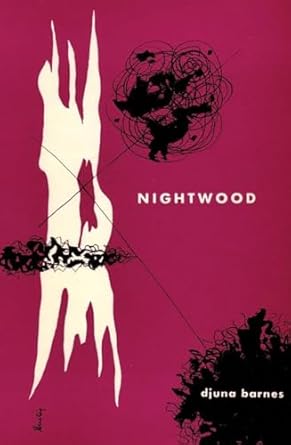
Nightwood is a modernist novel by Djuna Barnes that explores the lives of queer characters in 1920s Paris. The fragmented plot centers on the enigmatic Robin Vote and her tumultuous relationships with a series of lovers, including her husband, Felix, and the devoted Nora Flood. The novel’s philosophical heart lies in the poetic monologues of a cross-dressing doctor, Dr. Matthew O’Connor, who provides commentary on love and human nature. The story concludes with Robin’s symbolic regression into an untamed, animalistic state, embodying the wild and emotionally detached nature that defines her.
Willa Cather:
Willa Cather (1873-1947) was a Pulitzer Prize-winning American novelist renowned for her lyrical depictions of pioneer life on the Great Plains. While she is often seen as an author who resisted the more radical elements of modernism, her work is considered a key part of the literary movement due to her innovative narrative techniques and thematic concerns.
Willa Cather was born in Virginia but moved with her family to the Nebraska prairie at age nine. This move from the settled South to the untamed West had a profound and lasting impact on her writing. The landscape and the diverse community of European immigrants she encountered became the subjects of her most famous novels. After graduating from the University of Nebraska, she worked as a journalist and magazine editor in Pittsburgh and New York before dedicating herself to fiction. Her major works, including O Pioneers! (1913), My Ántonia (1918), and Death Comes for the Archbishop (1927), cemented her reputation as a major American writer.
Cather’s relationship with modernism is complex. She was a contemporary of major modernist authors like Ernest Hemingway and Virginia Woolf, and her work is characterized by a similar shift in focus from external plot to the internal lives and psychology of her characters. However, she was also critical of what she saw as the cheapness and vulgarity of modern life, expressing a preference for the values of a bygone era. In her 1936 essay collection, Not Under Forty, she famously stated, “The world broke in two in 1922 or thereabouts,” lamenting the decline of traditional culture.
Despite this, Cather’s writing exhibits several key characteristics of literary modernism. She favored a subtle, impressionistic style that she called a “Felt Narrative,” often leaving out sensational events to focus on the small, yet powerful, moments that shape a character’s emotional landscape. Her famous essay “The Novel Démeublé” (“The Unfurnished Novel”) advocates for this minimalist approach, stripping away unnecessary detail to create a more profound emotional resonance. Cather’s work also often uses a fragmented narrative structure. My Ántonia, for instance, is told through the memories of the narrator, Jim Burden, rather than a straightforward chronological plot. The more experimental The Professor’s House (1925) features a novel-within-a-novel structure. Like other modernists, Cather was deeply concerned with the disorienting effects of rapid change. Her novels often explore themes of nostalgia for a heroic past and the alienation felt by individuals in a new, more commercialized world. Her characters, particularly the sensitive artists and pioneers, often struggle to find their place in a modern society that seems to have lost its connection to nature and history.
Ultimately, while Cather’s work is not as overtly experimental as that of some of her peers, her subtle, psychologically rich, and formally inventive novels place her squarely within the modernist literary tradition.
My Ántonia (1918) / Discussion Questions
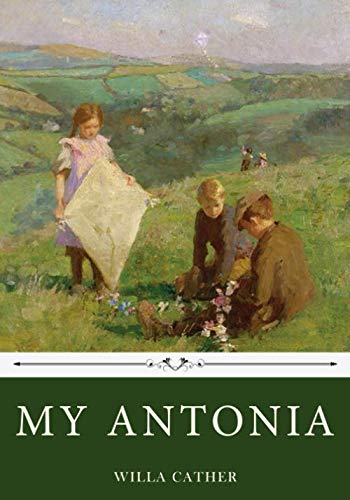
The novel tells the stories of an orphaned boy from Virginia, Jim Burden, and the elder daughter in a family of Bohemian immigrants, Ántonia Shimerda, who are each brought as children to be pioneers in Nebraska towards the end of the 19th century. Both the pioneers who first break the prairie sod for farming, as well as of the harsh but fertile land itself, feature in this American novel. The first year in the very new place leaves strong impressions in both children, affecting them lifelong.
This novel is considered Cather’s first masterpiece. Cather was praised for bringing the American West to life and making it personally interesting.
O Pioneers (1913) / Discussion Questions
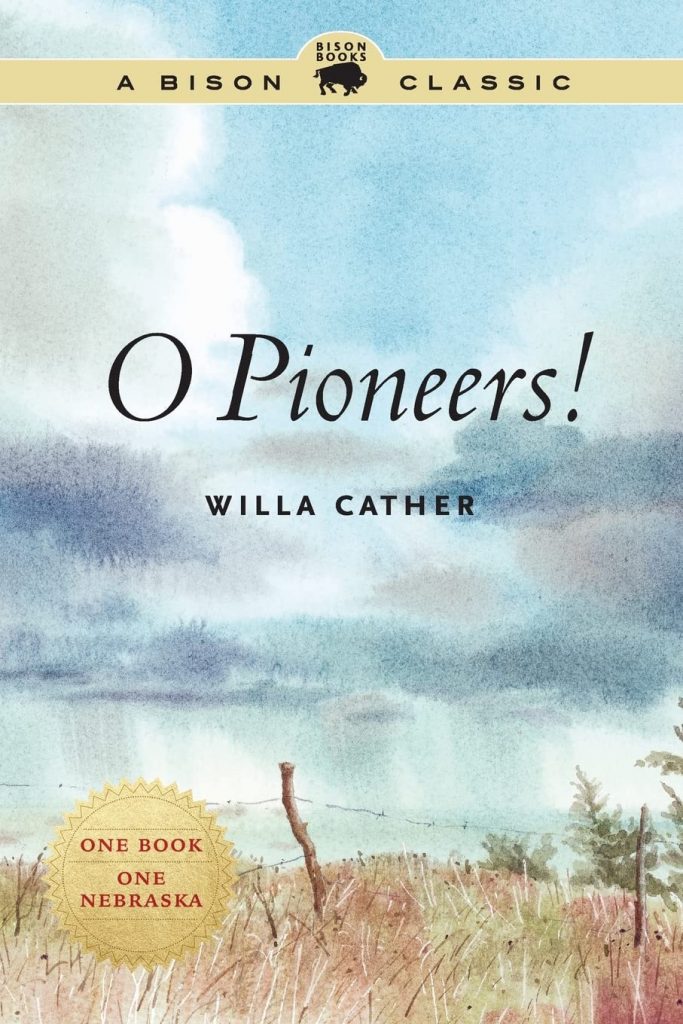
Willa Cather said that O Pioneers! was her first authentic novel, “the first time I walked off on my own feet—everything before was half real and half an imitation of writers whom I admired.” Cather’s novel of life on the Nebraska frontier established her reputation as a writer of great note and marked a significant turning point in her artistic development. No longer would she let literary convention guide the form of her writing; the materials themselves would dictate the structure.
Cather’s O Pioneers! is the sentimental and somewhat controversial story of the Bergsons, a family of Swedish pioneers that settles for life on the American prairie. While Alexandra, the family matriarch, is able to turn the family farm into a financial success, her brother Emil must grapple with the solace and tragedy of forbidden love. A novel surprisingly ahead of its time, this protofeminist work touches on a wide range of enduring themes, including love, marriage, temptation, and isolation.
Joseph Conrad:
Joseph Conrad (1857–1924) was a Polish-British novelist and short-story writer widely regarded as a significant figure in the transition from 19th-century realism to Modernism. Born Józef Teodor Konrad Korzeniowski in what is now Ukraine, he didn’t learn to speak English fluently until his twenties, but he went on to become a master of English prose. His experiences as a sailor in the French and British merchant navies heavily influenced his work, which often takes place in remote, exotic locations and explores the darker side of human nature.
Conrad’s style, while often rooted in adventure narratives, is fundamentally Modernist due to his focus on psychological complexity and innovative narrative techniques. He was a pioneer in moving away from the straightforward, omniscient narration of the Victorian era. In his most famous works, like Heart of Darkness and Lord Jim, he uses a frame narrative and an unreliable narrator named Marlow, who recounts events from a subjective and often fragmented perspective. This forces the reader to piece together the truth, reflecting the Modernist idea that objective reality is difficult to grasp.
Rather than focusing on external events, Conrad delved into the inner workings of his characters’ minds. He explored their moral ambiguities, existential crises, and internal conflicts, making his novels early examples of the modern psychological novel. Conrad’s writing is often described as “impressionistic,“ a style that uses sensory details and a subjective point of view to convey the atmosphere and emotional state of a scene, rather than providing a clear, objective description. This technique was a crucial precursor to the stream-of-consciousness style later perfected by writers like James Joyce and Virginia Woolf. Finally, his works often express a deep sense of pessimism and disillusionment with the ideals of Western civilization, a thematic critique that is a hallmark of the Modernist movement.
Heart of Darkness (1899) / Discussion Questions
Nightwood, reflects the period between the two World Wars, and unfolds in the decadent shadows of Europe’s great cities, Paris, Berlin, and Vienna―a world in which the boundaries of class, religion, and sexuality are bold but surprisingly porous.
The outsized characters who inhabit this world are some of the most memorable in all of fiction―there is Guido Volkbein, the Wandering Jew and son of a self-proclaimed baron; Robin Vote, the American expatriate who marries him and then engages in a series of affairs, first with Nora Flood and then with Jenny Petherbridge, driving all of her lovers to distraction with her passion for wandering alone in the night; and there is Dr. Matthew-Mighty-Grain-of-Salt-Dante-O’Connor, a transvestite and ostensible gynecologist, whose digressive speeches brim with fury, keen insights, and surprising allusions. Barnes’ depiction of these characters and their relationships (Nora says, “A man is another persona woman is yourself, caught as you turn in panic; on her mouth you kiss your own”) has made the novel a landmark of feminist and lesbian literature.
Most striking of all is Barnes’ unparalleled stylistic innovation, which led T. S. Eliot to proclaim the book “so good a novel that only sensibilities trained on poetry can wholly appreciate it.”
William Faulkner:
William Faulkner (1897–1962) was an American novelist and short-story writer who is considered a central figure of the Modernist movement. Born and raised in Mississippi, Faulkner spent most of his life in the American South, and his work is deeply rooted in its history, culture, and complexities. He created the fictional Yoknapatawpha County, a microcosm of Mississippi, which served as the setting for most of his major novels and stories. Faulkner’s writing earned him the Nobel Prize in Literature in 1949 for his “powerful and unique contribution to the modern American novel.”
Faulkner’s literary style is a hallmark of Modernism due to its radical experimentation with narrative form and its profound psychological depth. He broke away from conventional storytelling, employing techniques that challenged readers to engage with his work on a deeper, more intellectual level. For instance, he was a master of the stream of consciousness technique, which he used to blur the lines between past and present, thought and action. In his novel The Sound and the Fury, he dedicates an entire section to the inner monologue of a character with intellectual disabilities, offering a raw and unfiltered perspective.
Faulkner also abandoned chronological order to reflect how memory and trauma shape an individual’s perception of time. Stories are often told out of sequence, with frequent flashbacks and multiple perspectives, as seen in As I Lay Dying. This stylistic choice mirrors the fragmented nature of modern life and the psychological burden of history. Rather than relying on a single narrator, Faulkner frequently shifted between different characters’ points of view, creating a layered and sometimes contradictory account of events. This emphasizes the subjectivity of truth and reveals the complex inner lives of his characters. His sentences are famously long and intricate, filled with rich, evocative language and complex syntax. This dense and lyrical prose style contrasts sharply with the minimalist prose of his contemporary, Ernest Hemingway, and allows him to convey the full weight of his characters’ internal struggles and the historical baggage of the American South.
As I Lay Dying (1930) / Discussion Questions
As I Lay Dying is a modernist novel by William Faulkner that chronicles the Bundren family’s journey to bury their matriarch, Addie, in her hometown of Jefferson, Mississippi. The story is told through the inner thoughts of 15 different characters, creating a fragmented and unreliable narrative.
The family’s arduous trip is plagued by a series of disasters, including a dangerous river crossing that results in the loss of their mules and a broken leg for their son Cash. The coffin begins to decompose, attracting buzzards, and one of the sons, Darl, tries to burn it to end the suffering. Upon finally arriving in Jefferson, each family member pursues their own selfish desires, including the father, Anse, who quickly remarries. The novel concludes with the family burying Addie, revealing the personal motivations that fueled their seemingly dutiful pilgrimage.
The Sound and the Fury (1929) / Discussion Questions
The Sound and the Fury is a modernist novel that uses a fragmented, stream-of-consciousness narrative to portray the decline of the aristocratic Compson family. The story is told from the shifting perspectives of three brothers—Benjy, an intellectually disabled man; Quentin, a suicidal Harvard student haunted by his sister Caddy’s sexuality; and Jason, a bitter, cynical man who steals money meant for his niece. The final section, from an omniscient perspective, follows the compassionate servant Dilsey, who provides the only stability in the family’s tragic ruin. The novel’s central theme is the dissolution of a family and a way of life, all centered around the unseen figure of Caddy.
F. Scott Fitzgerald:
F. Scott Fitzgerald (1896–1940) was an American novelist and short-story writer widely considered a key figure of the Modernist movement and a member of the “Lost Generation.” Born in St. Paul, Minnesota, Fitzgerald’s life and work were heavily influenced by his complex relationship with wealth, class, and the pursuit of the American Dream. After attending Princeton and serving in the army, his first novel, This Side of Paradise (1920), brought him instant fame, launching him and his wife Zelda Sayre into the celebrity-fueled lifestyle of the Jazz Age—a term he coined. This period of great social change, which ultimately led to his personal and financial decline, became the central subject of his most famous work, The Great Gatsby (1925).
Although not as stylistically radical as some contemporaries like James Joyce, Fitzgerald’s writing is a cornerstone of American Modernism due to its blend of realism, lyrical prose, and its focus on key themes of the era. His novels, particularly The Great Gatsby, capture the deep sense of disillusionment and alienation that followed World War I. His characters, often wealthy and seemingly carefree, are revealed to be morally and spiritually empty, alienated from any meaningful purpose despite their extravagant lifestyles. This hollowness reflects the loss of traditional values in a new, consumer-driven world. Fitzgerald also uses rich and intricate symbolism to convey his themes. For instance, the green light at the end of Daisy’s dock represents Gatsby’s unattainable dream and the elusive nature of the past, while the Valley of Ashes symbolizes the moral and social decay that lies beneath the glittering surface of the Roaring Twenties.
Rather than using a traditional omniscient narrator, Fitzgerald employs the first-person perspective of Nick Carraway in The Great Gatsby. Nick is an unreliable narrator; his biased and limited point of view forces the reader to question the reality of events, a common Modernist technique that emphasizes the subjectivity of truth. Ultimately, Fitzgerald’s work is driven by the romantic aspiration of his characters, which he often portrays as a beautiful but ultimately futile quest, exploring the impossibility of recapturing the past and the tragic loss of innocence and idealism in a world that has traded integrity for material wealth.
The Curious Case of Benjamin Button (1922) / Discussion Questions
The Curious Case of Benjamin Button is a short story about a man who ages in reverse. The plot begins in 1860 in Baltimore, when a baby is born to the well-to-do Button family, but with the physical appearance and ailments of a seventy-year-old man. The boy, named Benjamin, is a source of shame and scandal for his parents, who force him to act like a baby despite his adult mind.
As he gets older, Benjamin physically gets younger. When he is in his twenties, he appears to be fifty, which allows him to fall in love and marry a woman who prefers older men. As he grows physically younger and his wife grows older, their relationship becomes strained. He joins the army, becomes a hero in the Spanish-American War, and later enrolls in college when he physically resembles a teenager.
Benjamin’s reverse aging continues, creating a role reversal with his son, who now looks older than his father and treats him like a child. Eventually, Benjamin regresses into an infant, losing his memories and consciousness, until he passes away as an infant, his life having come full circle.
The Great Gatsby (1925)/ Discussion Questions
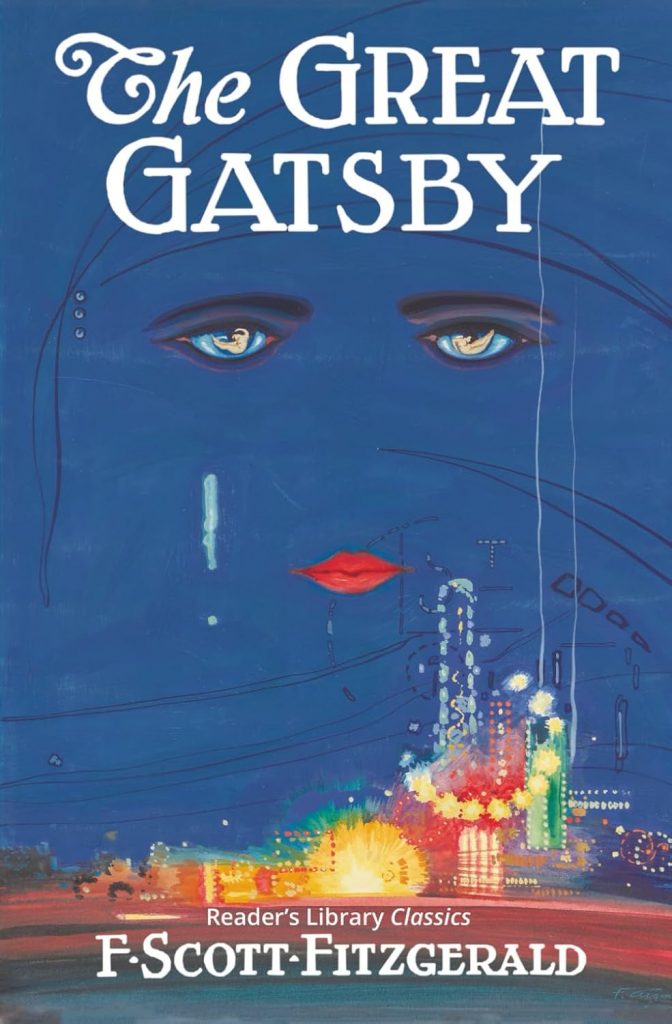
The Great Gatsby is a novel narrated by Nick Carraway, who moves next door to the mysterious millionaire Jay Gatsby in 1922 Long Island. Nick discovers that Gatsby’s extravagant parties are a desperate attempt to win back his long-lost love, Daisy Buchanan, Nick’s cousin.
Gatsby and Daisy begin an affair, but their relationship is complicated by her old-money husband, Tom. The central conflict culminates when Daisy, driving Gatsby’s car, accidentally hits and kills Tom’s mistress, Myrtle. Gatsby takes the blame to protect Daisy. In the tragic climax, Myrtle’s husband, George, murders Gatsby before taking his own life. The novel ends with Nick’s disillusionment with the wealthy and a realization that Gatsby’s dream was an empty pursuit of the past.
E. M. Forster:
Edward Morgan Forster (1879–1970) was an English novelist, short story writer, and essayist. He is considered a key transitional figure between Victorian and modernist literature, celebrated for novels such as A Room with a View (1908), Howards End (1910), and his masterpiece, A Passage to India (1924). While his prose style often appears traditional, his works exhibit many characteristics of modernism, particularly in their psychological depth, social critique, and thematic complexity.
Born in London, Forster was raised by his mother after his father’s early death. He attended King’s College, Cambridge, and became a part of the influential Bloomsbury Group, a circle of writers and intellectuals. An inheritance gave him the financial independence to pursue writing full-time. His extensive travels, particularly to Italy and India, provided the settings and inspiration for many of his novels. A private individual, Forster’s homosexuality was a central part of his life, a theme he explored in the posthumously published novel, Maurice (1971).
Forster’s writing subtly incorporates modernist elements. He moved beyond simple narrative to delve into the inner lives of his characters, a core aspect of psychological realism. His novels are not just stories of events but explorations of his characters’ motivations and emotional states. This is evident in his critical work, Aspects of the Novel (1927), where he distinguished between “flat” and “round” characters. .
Furthermore, Forster’s works are a sharp critique of rigid social conventions and class divisions. He exposed the hypocrisy and emotional repression of the English middle and upper classes, a skepticism toward established norms that is a hallmark of the modernist movement. He also employed rich symbolism to add layers of meaning to his narratives. For example, the house in Howards End symbolizes a disappearing, traditional England, while the mysterious Marabar Caves in A Passage to India represent the chaotic and unknowable aspects of existence.
A central theme in his work is the difficulty of genuine human connection in a fragmented modern world, a sentiment encapsulated in the famous phrase “Only connect…” from Howards End. This idea resonates with the sense of alienation found in the works of other modernist writers. Finally, Forster’s narrative voice is characterized by a subtle, detached irony and skepticism. This technique allowed him to expose the absurdities of society and his characters’ lives, reflecting the moral relativism and disillusionment of the early 20th century.
Howards End (1910) / Discussion Questions
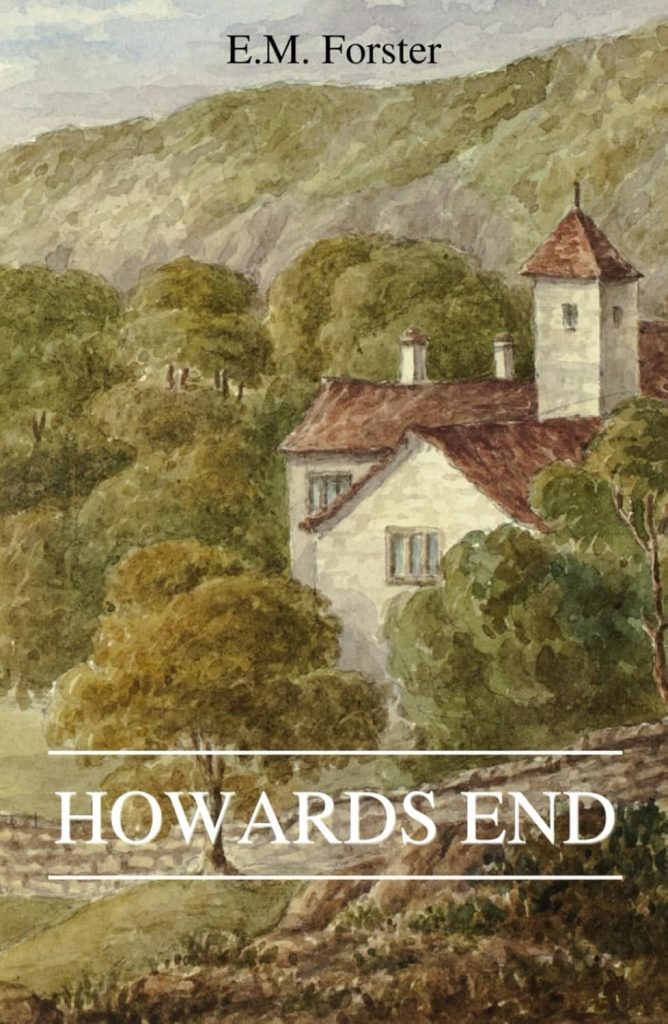
Howards End by E.M. Forster explores the tensions between three families representing different social classes in early 20th-century England: the intellectual Schlegels, the wealthy Wilcoxes, and the working-class Basts. The plot is set in motion when Mrs. Wilcox informally leaves her beloved country home, Howards End, to the sensible Margaret Schlegel. The Wilcox family suppresses this request, but a deeper connection forms when Margaret later marries the widower, Henry Wilcox. The lives of the families tragically intersect when the Schlegels’ involvement with the impoverished Leonard Bast leads to his accidental death at the hands of Henry’s son. The novel concludes with the symbolic union of the families’ values at Howards End, as Henry finally accepts his wife’s will and bequeaths the home to Margaret, suggesting a fragile hope for England’s future.
Robert Frost:
Robert Frost (1874–1963) was an American poet celebrated for his realistic depictions of rural New England life. Though his work often employed traditional poetic forms, his themes and use of language firmly link him to the modernist movement. He is a crucial figure because he bridged the gap between conventional 19th-century poetry and the new sensibilities of the 20th century.
Born in San Francisco, Frost moved to Massachusetts as a child after his father’s death. He attended Dartmouth and Harvard but left both without earning a degree. He spent years trying to make a living as a farmer and teacher before moving to England in 1912, where his first two collections, A Boy’s Will (1913) and North of Boston (1914), were published. In England, he befriended modernist poets like Ezra Pound and Imagist H.D., who recognized his innovative style. Upon his return to the U.S., he was celebrated as a major new voice. He went on to win four Pulitzer Prizes for Poetry and became a national literary icon, famously reciting his poem “The Gift Outright” at the inauguration of President John F. Kennedy in 1961.
While Frost famously rejected free verse, stating that writing it was “like playing tennis with the net down,” his poetry is imbued with modernist sensibilities. His use of colloquial, conversational language and the “sound of sense” (the natural rhythms of spoken American English) was a radical departure from the more formal, elevated language of the Victorian era. He used this simple, accessible language to explore complex, often dark, themes. Frost’s poems frequently deal with feelings of isolation, psychological turmoil, and alienation, which are central to the modernist experience. He portrays a world in which humanity is often at odds with nature, a skeptical view that contrasts with the romantic ideals of the previous century. For example, in “The Road Not Taken,” the choice presented is one of profound uncertainty and ambiguity, reflecting the modern individual’s sense of being unmoored. Unlike the more optimistic Victorian worldview, Frost’s poetry often expresses a deep pessimism about the human condition and the apparent indifference of the universe. He used simple, pastoral settings as a canvas for universal, existential questions, a technique that gave his work a depth and resonance that has endured far beyond its regional roots.
The Poetry of Robert Frost / Discussion Questions
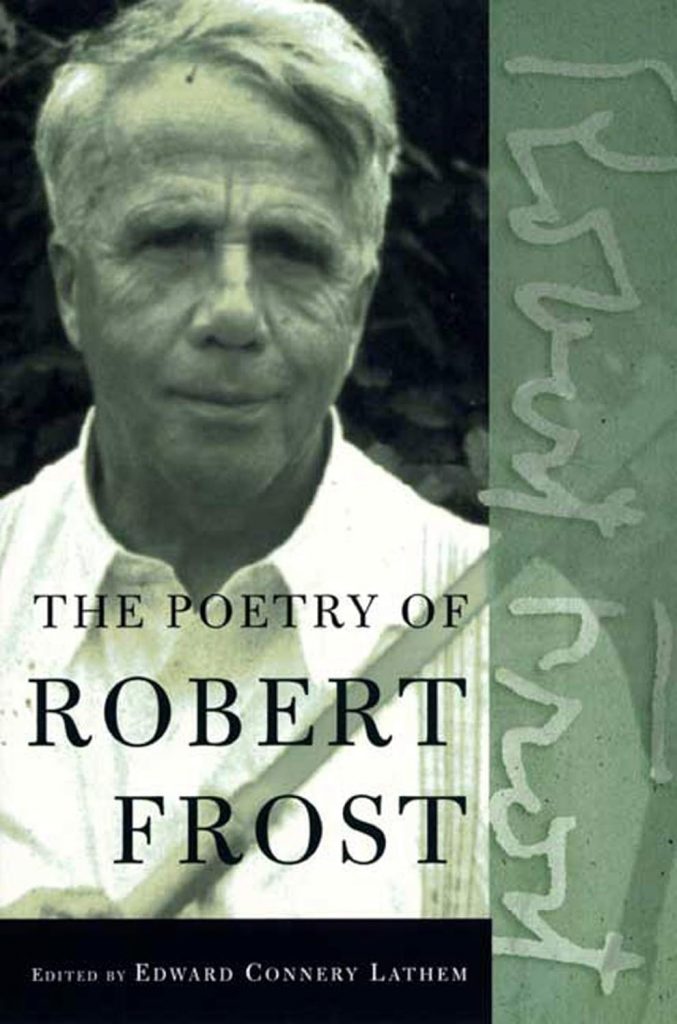
A feast for lovers of American literature-the work of our greatest poet, redesigned and relaunched for a new generation of readers
No poet is more emblematically American than Robert Frost. From “The Road Not Taken” to “Stopping by Woods on a Snowy Evening,” he refined and even defined our sense of what poetry is and what it can do. T. S. Eliot judged him “the most eminent, the most distinguished Anglo-American poet now living,” and he is the only writer in history to have been awarded four Pulitzer Prizes.
The only comprehensive volume of Frost’s verse available, comprising all eleven volumes of his poems, this collection has been the standard Frost compendium since its first publication in 1969.
H. G. Wells:
Herbert George Wells (1866–1946) was an English writer, journalist, and social critic. While he’s best known as “the father of science fiction” for pioneering works like The Time Machine (1895) and The War of the Worlds (1898), his writing style and thematic concerns place him as a crucial transitional figure from Victorian realism to modernism. Wells used the seemingly conventional genre of scientific romance to explore radical ideas about society, science, and the human condition.
Born into a lower-middle-class family, Wells had a difficult childhood. After a short, unhappy apprenticeship as a draper, he won a scholarship to study biology under Thomas Henry Huxley, a prominent advocate of Darwinian theory. This scientific training profoundly influenced his writing. Wells was a vocal socialist, and his later works shifted from fiction to social and political commentary. He was a highly public intellectual who frequently wrote essays and proposed utopian visions for a world state.
Wells’ writing is a bridge to modernism in its innovative blending of scientific thought with social critique and psychological depth. His novels, particularly the early “scientific romances,” use a realist narrative frame to present a single, fantastic premise. This technique, dubbed “Wells’ law,” grounds extraordinary events in everyday reality, making them more psychologically and socially impactful. The invasion in The War of the Worlds, for example, is told from the perspective of an ordinary person in suburban London, a style that creates a powerful sense of alienation and a breakdown of stable reality.
Thematicallly, Wells was deeply engaged with modernist anxieties. He used his fantastic tales to explore the darker implications of scientific progress and social evolution. Works like The Island of Doctor Moreau (1896) use biological horror to question the boundaries between human and animal, civilization and savagery. His narratives often depict a pessimistic vision of humanity’s future, portraying societies that have degenerated or are on the verge of collapse. This focus on existential dread and the fragility of civilization moves away from the Victorian belief in linear progress.
Wells also had a skeptical and often satirical tone, particularly in his social realist novels like Kipps (1905). He was adept at using irony to expose the absurdities and hypocrisies of the English class system and capitalist society. While he did not experiment with narrative form in the radical way of his contemporaries like James Joyce or Virginia Woolf, his use of fiction as a vehicle for social diagnosis and philosophical inquiry made him a significant forerunner of the modernist movement.
The War of the Worlds / Discussion Questions
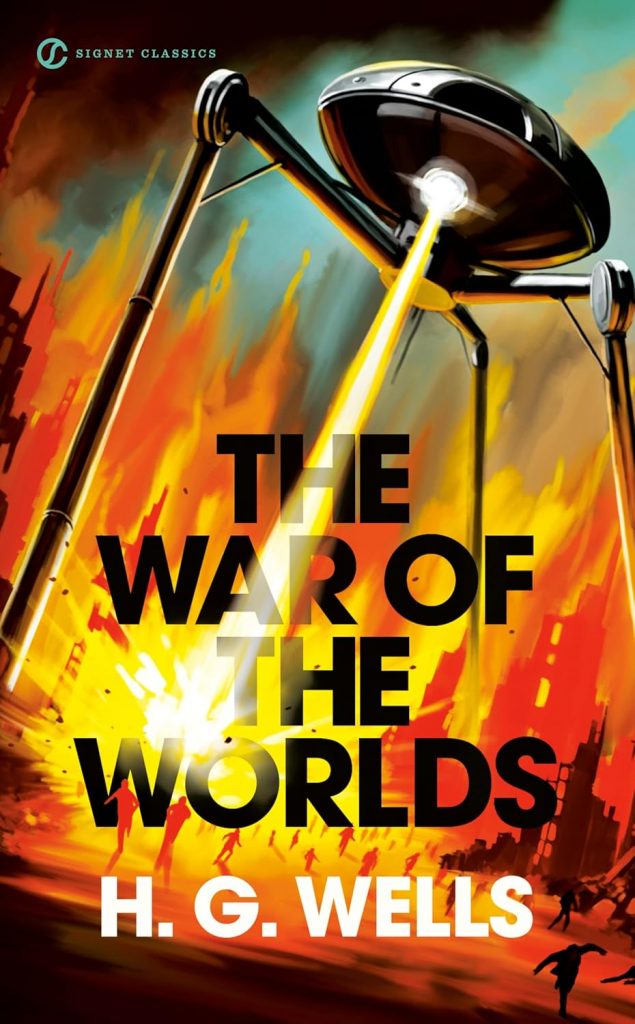
The War of the Worlds is a science fiction novel about a devastating invasion of Earth by an advanced alien race from Mars. The story is a first-person account of an unnamed narrator’s struggle for survival as the Martians, in their tripod fighting machines, methodically destroy human civilization with heat-rays and poison gas. All human resistance proves futile until the Martians are unexpectedly defeated not by military force, but by a common microbe to which they have no immunity.
The Invisible Man / Discussion Questions
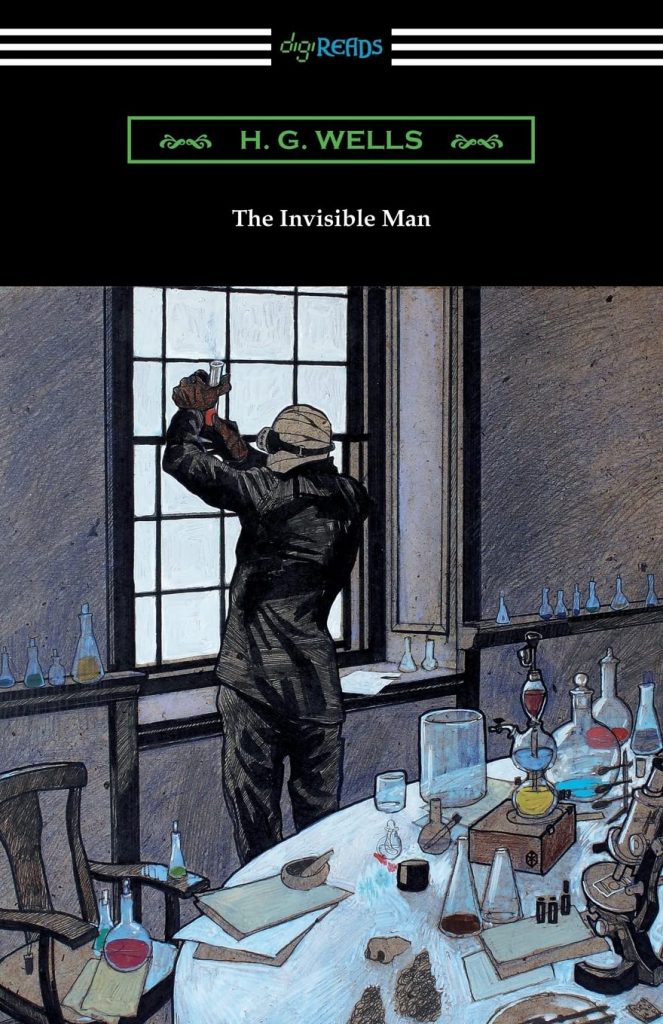
The Invisible Man by H.G. Wells is the story of a brilliant but unhinged scientist named Griffin who successfully discovers how to turn himself invisible. He finds that the state is irreversible and, unable to cope with the reality of his situation, he spirals into madness and violence. He attempts to establish a “Reign of Terror” by using his invisibility to commit crimes and terrorize a small English village, but his plans are ultimately foiled by his former acquaintance, Dr. Kemp. The novel concludes with Griffin’s death at the hands of a mob, which causes his body to slowly become visible again.
Ernest Hemingway:
Ernest Hemingway (1899–1961) was an American novelist and journalist, and a central figure of the Modernist movement. Born in Illinois, his life was a series of adventures that became the raw material for his work, including his service as an ambulance driver in World War I, his time as a member of the expatriate community in 1920s Paris (the “Lost Generation”), and his experiences as a war correspondent. This unique blend of a bold public persona and a profound, minimalist literary style earned him the Nobel Prize in Literature in 1954.
Hemingway’s literary style is a cornerstone of Modernism, best understood through his famous “Iceberg Theory.” This principle, also known as the “theory of omission,” suggests that the most powerful part of a story lies beneath the surface, much like a submerged iceberg. His writing is characterized by its economy and simplicity, using short, declarative sentences and avoiding excessive adjectives and complex sentence structures. This stripped-down prose, a direct product of his early career as a journalist, focuses on concrete actions and dialogue rather than elaborate descriptions or internal monologues.
Instead of explicitly stating characters’ feelings or motivations, Hemingway implies them through their actions and what they leave unsaid. The emotional weight of a scene is carried by the subtext and the reader’s own interpretation, making the experience more engaging and personal. Like other Modernists, Hemingway’s work explores a deep sense of disillusionment and moral decay. His characters, often tough and seemingly stoic men, are frequently grappling with trauma, a loss of faith in traditional values, and a profound sense of alienation, particularly after the devastation of World War I. This is a central theme in works like The Sun Also Rises and A Farewell to Arms.
The Old Man and the Sea (1952) / Discussion Questions
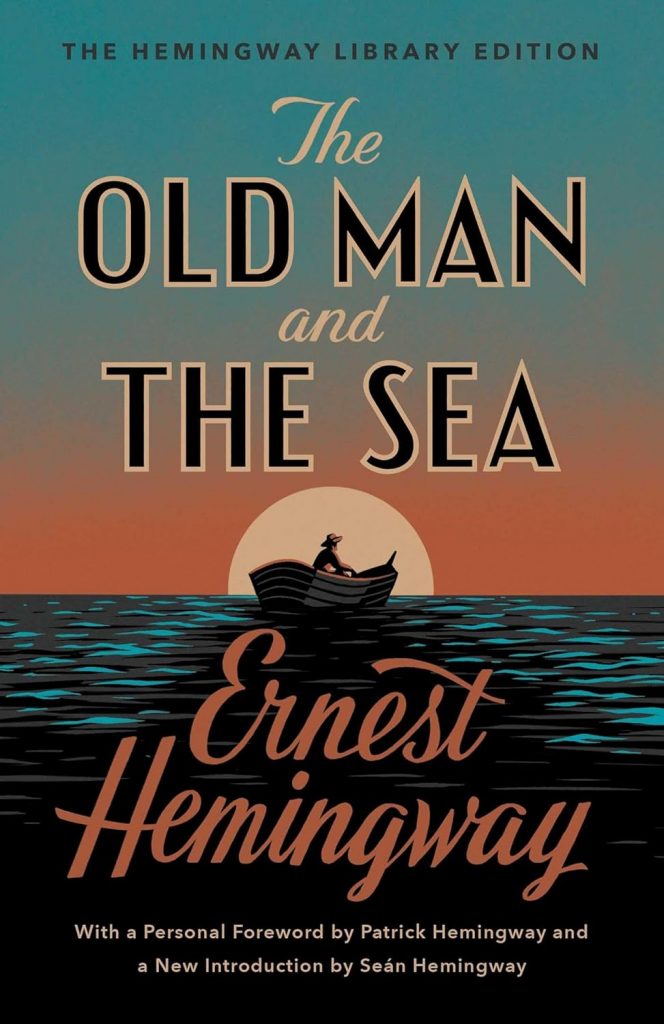
The Old Man and the Sea is a novella about Santiago, an aging Cuban fisherman who, after 84 days of bad luck, hooks a giant marlin far out at sea. He battles the fish for three days, eventually killing it. On his return journey, sharks relentlessly attack the marlin, leaving only its skeleton. Santiago returns defeated but with his spirit unbroken. His young apprentice, Manolin, reaffirms his loyalty and promises to fish with him again, while Santiago dreams of lions, a symbol of his strength and endurance.
The Sun Also Rises (1926) / Discussion Questions
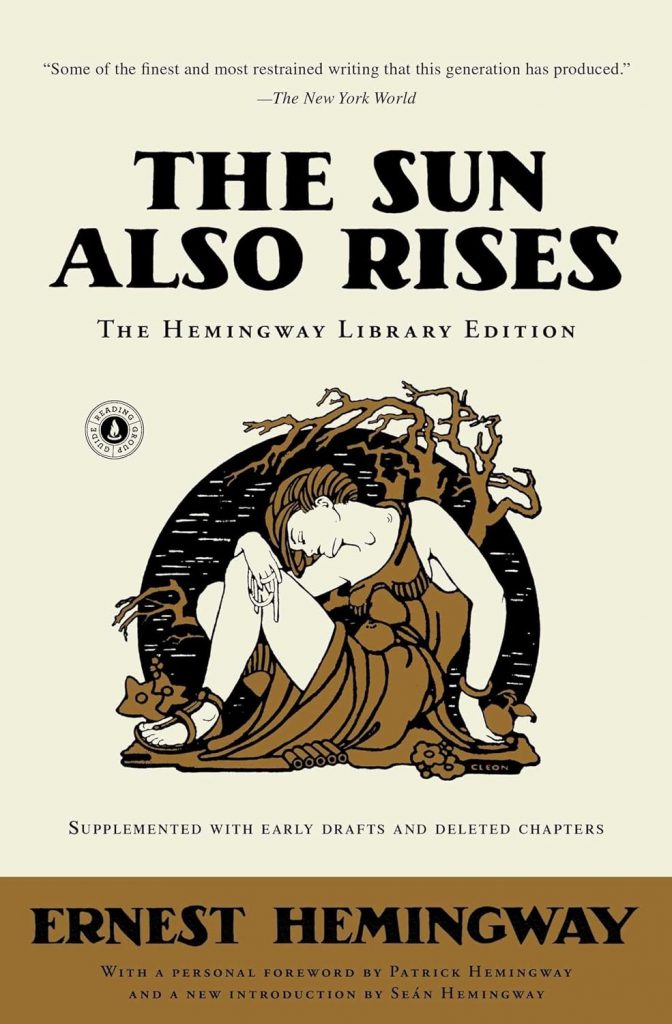
The Sun Also Rises follows American journalist Jake Barnes and his group of expatriate friends, the “Lost Generation,” as they travel from Paris to the Pamplona bullfighting festival in Spain. The central plot revolves around the unconsummated love between Jake, who is impotent due to a war injury, and the emotionally detached Lady Brett Ashley. Their unfulfilled relationship and the constant drinking fuel the romantic tensions within their social circle. The group’s dynamic crumbles during the chaotic festival, particularly after Brett has an affair with a young matador. The novel concludes with the group’s disillusionment and the final, melancholic realization that Jake and Brett’s love is impossible, a theme that captures the aimlessness and despair of a generation scarred by war.
Aldous Huxley:
Aldous Huxley (1894–1963) was a British writer and intellectual, a central figure in literary modernism. Born into a prominent intellectual family, his grandfather was the biologist T. H. Huxley and his great-uncle was the poet Matthew Arnold. He was a prolific writer, producing over 50 books across various genres, including novels, essays, poetry, and screenplays.
Huxley’s work is deeply rooted in the modernist tradition, engaging with the anxieties and transformations of the early 20th century. His writing style is characterized by a blend of intellect and wit, often employing satire to critique the follies of modern society. He was a contemporary of and socialized with other leading modernists like T.S. Eliot and Virginia Woolf. He also contributed to modernist magazines and his work was often discussed alongside other prominent modernist authors.
Huxley’s novels, particularly his most famous work, Brave New World, exhibit key modernist elements. His novels dissect the failings of a world increasingly driven by science, technology, and consumerism. Brave New World is a quintessential modernist text that presents a chilling, dystopian vision of a future where individuality has been sacrificed for the sake of social stability and pleasure. This profound pessimism and disillusionment with modern progress is a hallmark of the modernist movement.
Huxley often incorporated references to other works of literature and philosophy. For instance, in Brave New World, he uses extensive allusions to Shakespeare to underscore the cultural and emotional emptiness of his futuristic society. This technique of referencing and recontextualizing historical texts is a common modernist device. A core theme in Huxley’s work is the dehumanizing effect of mass production and mass culture. His writing expresses a deep fear that art and intellectualism would be replaced by simplistic, commodified entertainment. This concern about the loss of high culture to the forces of commercialism was a significant preoccupation for many modernist writers and thinkers.
Huxley’s work stands as an intellectual bridge, satirizing the shallow preoccupations of the Jazz Age in his early novels and later, with Brave New World, offering a prophetic and enduring critique of modernity that continues to resonate today.
Brave New World (1932) / Discussion Questions
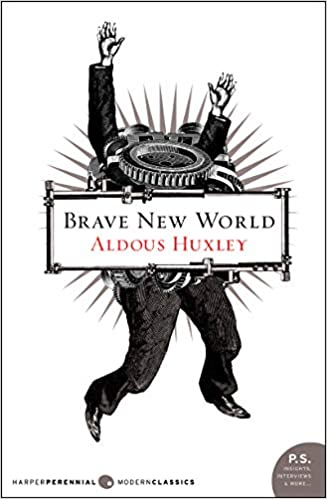
Brave New World by Aldous Huxley is a dystopian novel set in a futuristic World State where citizens are genetically engineered, conditioned, and drugged with a substance called Soma to ensure social stability and happiness. The plot follows Bernard Marx, an individual who feels alienated from this conformist society, and John the “Savage,” a man from a reservation who was raised on Shakespeare and old-world values. John is brought to the World State as a curiosity, but his presence challenges the state’s artificial stability, ultimately leading to his tragic downfall and the failure of his rebellion against the society’s sterile perfection.
Oscar Wilde:
Oscar Wilde (1854–1900) was an Irish poet, playwright, and novelist, a central figure of the late Victorian era. He is not considered a modernist writer in the traditional sense, but a crucial transitional figure who laid the groundwork for the movement. His work is defined by the Aesthetic and Decadent movements of the late 19th century, which championed “art for art’s sake” and an escape from Victorian moralism.
Wilde’s life and work were a direct challenge to the staid values of his time. After a brilliant academic career at Trinity College, Dublin, and Magdalen College, Oxford, he moved to London and cultivated a public persona as a witty dandy and spokesman for aestheticism. His plays, such as The Importance of Being Earnest, and his only novel, The Picture of Dorian Gray, were celebrated for their brilliant wit and satire. His career, however, was tragically cut short by his imprisonment for “gross indecency” due to his homosexuality, which led to his final years in exile in France.
Wilde’s link to modernism is found in his profound rebellion against the Victorian literary tradition. He was one of the first major English writers to argue that art should be judged on its aesthetic merits alone, not on its moral content. This idea, which he explored in essays and in The Picture of Dorian Gray, broke from the didacticism of the past and opened the door for the formal and thematic experimentation of the 20th century. His work also moved toward a deeper psychological realism, focusing on the internal complexities and double lives of his characters, which anticipates modernist concerns with the fragmented self. Finally, Wilde’s public persona as an artistic outsider and his eventual downfall made him a powerful symbol of the artist’s conflict with a repressive society, an archetype that would resonate deeply with subsequent modernist writers. He was a brilliant stylist who did not break with traditional forms, but his attitudes and subject matter were a radical departure that prepared the way for the literary revolution that would follow.
The Picture of Dorian Gray (1890) / Discussion Questions
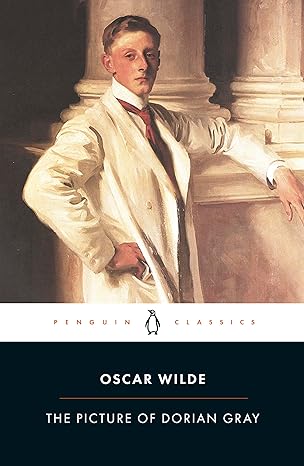
The Picture of Dorian Gray is a novel about a young man named Dorian Gray who has his portrait painted. Wishing to remain forever young, he makes a wish that the portrait would age and bear the marks of his sins instead of himself. His wish comes true, allowing him to live a life of hedonism and depravity while his portrait physically records his moral decay. In a fit of rage and horror at his own ugliness, he destroys the painting, which results in his own death and the restoration of the painting to its original beauty, while he is found as a withered old man.
Virginia Woolf:
Virginia Woolf (1882–1941) was an English novelist, essayist, and critic, and a pioneering figure of the Modernist literary movement. A central member of the Bloomsbury Group, an influential circle of intellectuals and artists, she was at the forefront of the radical shift away from Victorian literary conventions. Her work explored the depths of human consciousness and emotion, making her one of the most important writers of the 20th century. Woolf’s life was marked by her struggles with mental illness, which profoundly influenced her introspective and psychologically complex writing.
Woolf’s writing style is a definitive example of Modernism, characterized by its focus on inner life and her revolutionary use of narrative form. She perfected the stream of consciousness narrative technique, which aims to present a character’s thoughts, feelings, and memories as a continuous, unfiltered flow. In novels like Mrs. Dalloway and To the Lighthouse, the plot is secondary to the characters’ interior monologues, which often jump back and forth in time. This approach captures the subjective and fluid nature of human thought.
Rather than focusing on external actions, Woolf’s novels are driven by the psychological experiences of her characters. She used language to explore complex emotions, memories, and the fleeting moments of everyday life, arguing that the most significant events of a person’s life happen inside their mind. Woolf deliberately moved away from conventional, linear plots with a clear beginning, middle, and end. Her novels often unfold over a short period (a single day in Mrs. Dalloway) or are structured around a single, unifying symbol or idea (the trip to the lighthouse). She believed that the true drama of life was found in the subjective, internal world, not in external events. Her writing is also known for its lyrical, poetic quality, as Woolf’s prose is highly descriptive and impressionistic, conveying atmosphere and emotion through a series of vivid images and fragmented perceptions rather than a direct statement.
Orlando (1928) / Discussion Questions
Orlando by Virginia Woolf is a fantastical “biography” that follows the life of its androgynous hero/heroine over four centuries. The story begins in the 16th century with Orlando as a male nobleman at the court of Queen Elizabeth I. He lives for centuries without aging significantly and experiences a sudden, mysterious sex change to become a woman. As a woman, Orlando continues her journey through different historical periods, grappling with the social expectations and limitations of her new gender. The novel satirizes traditional biography and explores themes of gender fluidity, identity, and the nature of time itself, ultimately concluding with Orlando as a woman in the modern era of the 1920s.
To the Lighthouse (1927) / Discussion Questions
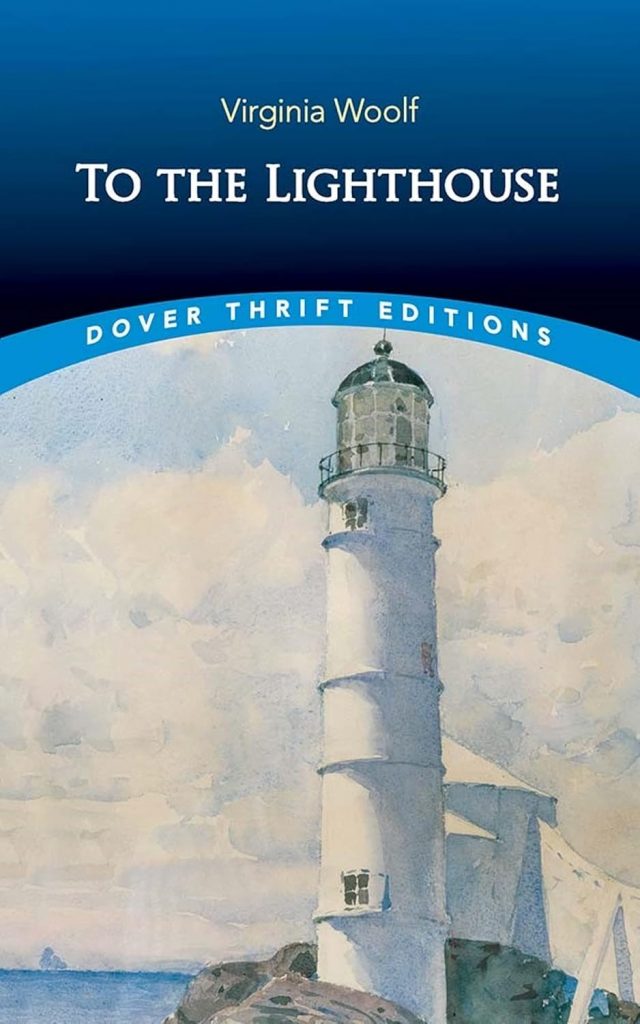
To the Lighthouse is a modernist novel that uses a stream-of-consciousness narrative to explore the passage of time and the intricacies of human relationships. The novel is structured into three parts. The first part focuses on a single day in the life of the Ramsay family and their guests at a summer home in Scotland, centered around their matriarch, Mrs. Ramsay, and her son’s desire to visit a nearby lighthouse. The second part, “Time Passes,” is a brief, lyrical interlude that spans ten years, noting the deaths of Mrs. Ramsay and others, and the decay of the house. In the final part, “The Lighthouse,” the surviving family members return to the house and finally make the journey to the lighthouse, while the painter Lily Briscoe finishes her long-stalled portrait of Mrs. Ramsay. The plot is secondary to the characters’ inner thoughts and the novel’s meditation on memory, loss, and art.
The Modernist literary movement was a revolutionary force that fundamentally reshaped the landscape of literature. By moving away from traditional forms and embracing experimentation, fragmentation, and psychological depth, it captured the profound sense of change and uncertainty that defined the early 20th century. The innovations of writers like Barnes, Woolf, and Hemingway not only mirrored the anxieties of their time but also established a new artistic paradigm that continues to influence contemporary literature, ensuring Modernism’s legacy as a pivotal moment in the history of art and ideas.
**All biographical information and literary theory above was derived from the resources listed below. Book summaries adapted from descriptions provided by Amazon, Thrift Books, publisher sites, and sites like LitLovers.com and Goodreads.com.**
About the Book Club Resource
Book club sets are circulated to participating libraries via the CLiC courier. Read all about the program on the Book Club Resource landing page. If you are interested in receiving book club sets but are not already a member library, use the online form to get signed up.
Since the BCR has always relied on book donations, we are deeply grateful to all the libraries, authors, and organizations that have donated sets and helped make the collection stronger. Please contact [email protected] for questions or to discuss donations.
Resources:
- Wikipedia: Literary Modernism
- Modernism in Literature – Essarypro.com
- The 10 Best Modernist Books (in English) – Publishersweekly.com
- Modernist Literature – Britannica
- Key Modernist Authors to Know for Art and Literature, The Modern Period – library.faveable.me
- Intro to Comparative Literature review: 9.1 Characteristics of Literary Modernism – library.faveable.me
- World Literature II Review: 3.1 Origins of Literary Modernism – library.fiveable.me
- A Literary History of Modernism [Timeline] – OUPblog
- Modernism Lab – Yale Univeristy
- The Routledge Encyclopedia of Modernism
Djuna Barnes:
- Wikipedia
- Djuna Barnes’ Legacy: Coaching Modernism – Gilliam Writers Group
- Djuna Barnes: Modernist Writer, feminist journalist – Britannica
Willa Cather:
- Wikipedia
- Willa Cather Archive
- Willa Cather Foundation
- Remembering Pulitzer-Prize Winning Novelist Willa Cather on her 150th Birthday – Library of Congress
Joseph Conrad:
- Wikipedia
- Joseph Conrad: Slow Modernism – Oxford Academic
- Joseph Conrad Study Guide
- Outposts of Progress: Joseph Conrad, Modernism and Post Colonialism – University of Cape Town
William Faulkner:
- Wikipedia
- William Faulkner: American Literature -1860 to Present – fiveable
- William Faulkner’s Writing Style – Medium.com
- Faulkner and Modernism – Cambridge University Press
F. Scott Fitzgerald:
E. M. Forster
- Wikipedia
- Britannica
- Humanist UK
- E. M. Forster, The Art of Fiction No. 1 – The Paris Review
- Modernism Lab
- Julian Barnes: I was wrong about EM Forster – The Guardian
- Peter Rose on the Peculiar Charms of E.M. Forster – Australian Book Review
- A Great Unrecorded History: A New Life of E. M. Forster – PEN America – the Freedom to Write
Robert Frost
- Wikipedia
- Academy of American Poets
- “It Goes On”: Robert Frost and the Lessons of Suffering – wordonfire.org
H. G. Wells
- Wikipedia
- The H. G. Wells Society
- Modernism Lab – Yale University
- The War Inside H. G. Wells – The New yorker
Ernest Hemingway:
- Wikipedia
- The Hemingway Society
- Below the Surface: Hemingway’s Iceberg Theory and Its Implications for Modern Writing – Gilliam Writers Group
- Hemingway’s The Sun Also Rises peaks for the Lost Generation – EBSCO
Aldous Huxley:
- Wikipedia
- The Talented Mr. Huxley – Humanities (NEH)
- Modernism Lab – Yale University
- Aldous Huxley: The Art of Fiction #24 – The Paris Review
- Aldous Huxley – EBSCO
Oscar Wilde:
Virginia Woolf:
- Wikipedia
- Britannica
- Virginia Woolf Was More Than Just a Woman’s Writer – Humanities (NEH)
- Where to Start With: Virginia Woolf – The Guardian
- A Consciousness of Reality – The New Yorker
.png)
- Book Club Author Suggestion: David McCullough - July 2, 2026
- Book Club Author Suggestion: Maggie O’Farrell - June 3, 2026
- Book Club Author Suggestion: David Grann - May 5, 2026