

The Harlem Renaissance was an extraordinary cultural and artistic movement that flourished in the 1920s and 1930s. It was a period when African American artists, writers, musicians, and thinkers gathered in the Harlem neighborhood of New York City, sparking a creative explosion that redefined black identity and culture.
The movement, sometimes referred to as the “New Negro Movement,” was a direct response to the Great Migration, which saw millions of African Americans move from the rural South to urban centers in the North. In Harlem, these diverse voices found a common ground and a collective purpose: to express the African American experience with pride, defiance, and self-determination.
Harlem Renaissance writers broke away from the Victorian-era stereotypes that had long defined black characters in literature. Instead, they explored a wide range of themes, including the legacy of slavery, the trauma of racism and poverty, the complexity of urban life, and the search for identity and belonging. The literature of this period is known for its:
- Racial Pride: A rejection of white standards of beauty and an affirmation of black culture and heritage.
- Use of Folklore and Dialect: An incorporation of black vernacular, spirituals, and jazz rhythms into poetry and prose.
- Social Critique: An unflinching examination of racial inequality, injustice, and the hypocrisy of American society.
- Exploration of Identity: A deep dive into the psychological effects of racism, a search for a distinct black identity, and a celebration of black love and life.
Key figures of the literary movement include poets like Langston Hughes and Countee Cullen, novelists such as Zora Neale Hurston and Nella Larsen, and essayists including W. E. B. Du Bois and Alain Locke. Their work laid the foundation for modern African American literature and continues to influence generations of writers today. The movement’s emphasis on racial pride, cultural expression, and social critique resonated deeply, inspiring a wide range of authors from the mid-20th century to the present day, including: Richard Wright, Ralph Ellison, James Baldwin, Alice Walker, Toni Morrison, Maya Angelou, Ta-Nehisi Coates, Jesmyn Ward, and more.
There are many authors considered part of the Harlem Renaissance, and we are fortunate to have several of them represented in the Book Club Resource collection. Check out the authors and their works highlighted below.
Langston Hughes:
Langston Hughes (1902–1967), often called the “poet laureate of Harlem,” was a prolific and influential figure of the era. He pioneered a new kind of poetry that incorporated the rhythms of jazz and blues and the everyday language of African American life. His work, including collections like The Weary Blues and the essay “The Negro Artist and the Racial Mountain,” was a powerful call for black artists to embrace their unique cultural identity without shame or fear. While best known as a poet, Hughes also demonstrated his talent as a masterful storyteller. His writing blends elements of blues and jazz, speech and song, into a vibrant and original idiom.
The Ways of White Folks / Discussion Questions
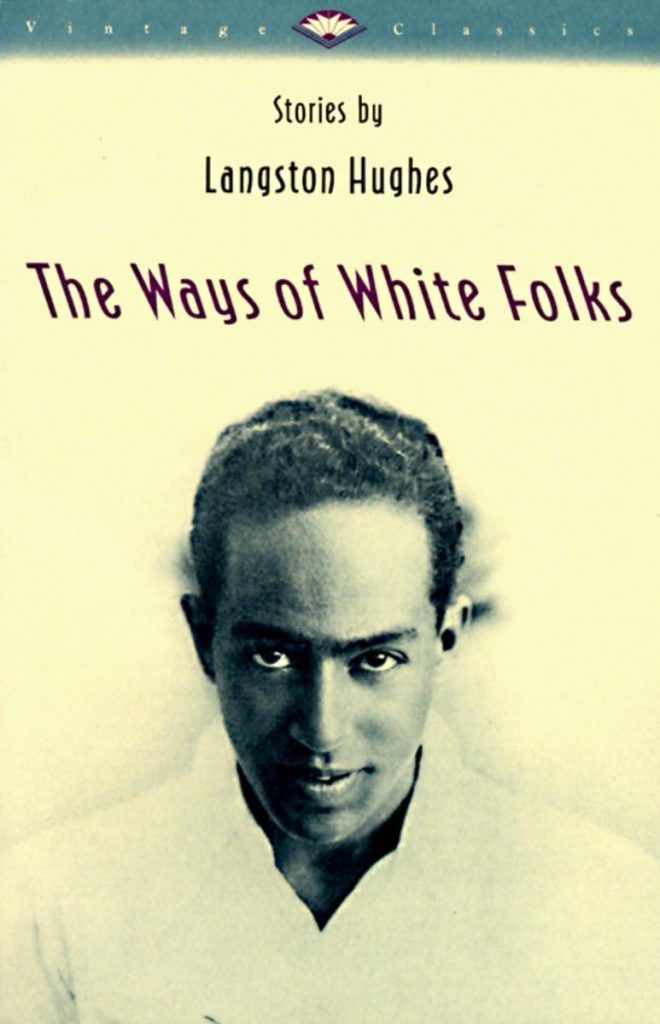
The Ways of White Folks is a collection of short stories by Langston Hughes that offers a sharp, satirical critique of racial dynamics in America during the Jim Crow era. Published in 1934, the book shifts Hughes’s focus from poetry to a more direct prose style, using irony to expose the hypocrisy and moral failings of white characters who, despite their liberal-seeming attitudes, reveal deep-seated prejudices. The collection’s significance lies in its unflinching portrayal of the psychological toll of racism and its groundbreaking critique of white paternalism, establishing a new form of protest literature that influenced later generations of writers.
Zora Neale Hurston:
Zora Neale Hurston (1891–1960) was a highly important figure in American literature because she championed African American culture and folklore. As both an anthropologist and a writer, she pioneered the use of Black vernacular and dialect in her novels, most notably in her masterpiece, Their Eyes Were Watching God. This radical approach validated Black folk culture as worthy of serious literary art. She also explored themes of female independence and agency long before the feminist movement, making her a foundational figure in Black feminist and womanist literary criticism. Although her work was largely forgotten for decades, its rediscovery in the 1970s cemented her legacy as a literary icon who profoundly influenced generations of writers.
Their Eyes Were Watching God / Discussion Questions
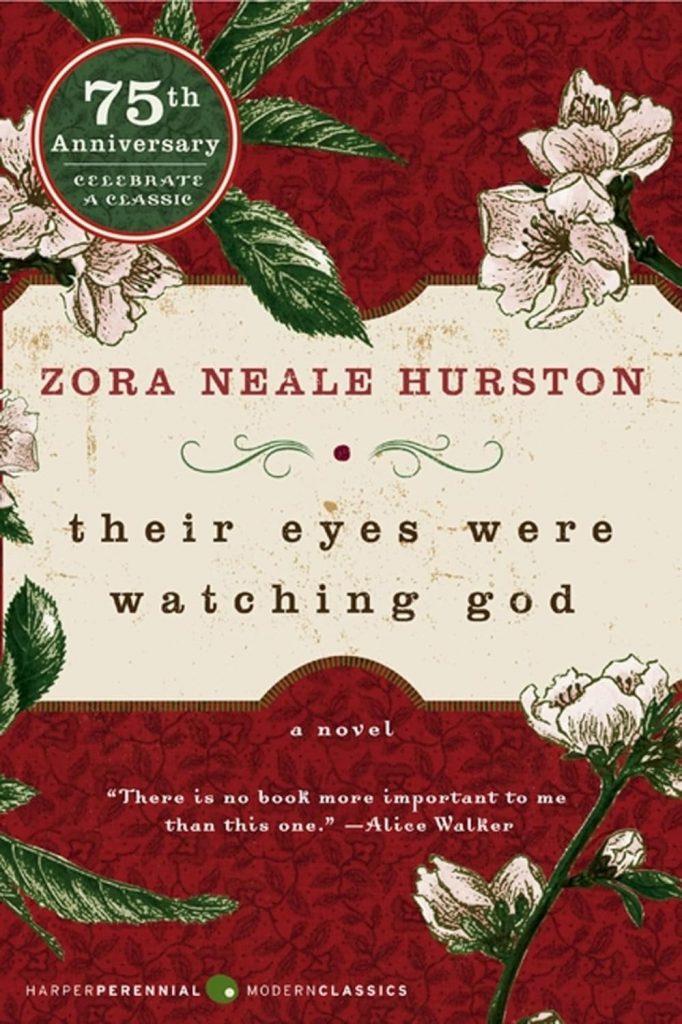
Written in 1937, and praised by white book reviewers for being a “rich and racy love story, if somewhat awkward” and criticized by black critics for not writing fiction in the protest tradition. The most influential black writer of the time, Richard Wright wrote that Hurston’s book did for literature what the minstrel shows did for theater, it made white folks laugh at black folks. Throughout the 1940s & 50s “Their Eyes Were Watching God” was all but forgotten, slipping out of print because of Wright’s influence. However, somewhere around 1968 “Their Eyes..” began appearing in black bookstores across the country. What appealed to most Africian American women discovering “Their Eyes..” for the first time, was the compelling figure of the books heroine, Janie Crawford as a powerful, articulate, self-reliant, and radically different from any woman character in black literature. Here was a woman on a quest for her own identity, whose journey would take her, not away from, but deeper and deeper into immersion of her black tradition. By 1971, “Their Eyes Were Watching God” was an underground phenomenon and that by 1977 when the MLA Commission on Minority Groups and the Study of Language and Literature published its first list of out of print book most in demand across the nation, “Their Eyes…” topped the list. The background of how this book has become a classic, and the journey it has taken is almost as fascinating as the novel itself. Sadly, Zola Neale Hurston died in 1960 never realizing how popular her book would become one day.
Barracoon: the Story of the Last “Black Cargo” / Discussion Questions

In 1927, Zora Neale Hurston went to Plateau, Alabama, just outside Mobile, to interview eighty-six-year-old Cudjo Lewis. Of the millions of men, women, and children transported from Africa to America as slaves, Cudjo was then the only person alive to tell the story of this integral part of the nation’s history. Hurston was there to record Cudjo’s firsthand account of the raid that led to his capture and bondage fifty years after the Atlantic slave trade was outlawed in the United States.
In 1931, Hurston returned to Plateau, the African-centric community three miles from Mobile founded by Cudjo and other former slaves from his ship. Spending more than three months there, she talked in depth with Cudjo about the details of his life. During those weeks, the young writer and the elderly formerly enslaved man ate peaches and watermelon that grew in the backyard and talked about Cudjo’s past—memories from his childhood in Africa, the horrors of being captured and held in a barracoon for selection by American slavers, the harrowing experience of the Middle Passage packed with more than 100 other souls aboard the Clotilda, and the years he spent in slavery until the end of the Civil War.
Based on those interviews, featuring Cudjo’s unique vernacular, and written from Hurston’s perspective with the compassion and singular style that have made her one of the preeminent American authors of the twentieth-century, Barracoon masterfully illustrates the tragedy of slavery and of one life forever defined by it. Offering insight into the pernicious legacy that continues to haunt us all, black and white, this poignant and powerful work is an invaluable contribution to our shared history and culture.
These authors, along with many others, contributed to a rich and varied body of literature that went beyond a single style or theme, making the Harlem Renaissance a truly multifaceted and enduring cultural phenomenon.
**All biographical information and literary theory above was derived from the resources listed below. Book summaries adapted from descriptions provided by Amazon.com.**
About the Book Club Resource
Book club sets are circulated to participating libraries via the CLiC courier. Read all about the program on the Book Club Resource landing page. If you are interested in receiving book club sets but are not already a member library, use the online form to get signed up.
Since the BCR has always relied on book donations, we are deeply grateful to all the libraries, authors, and organizations that have donated sets and helped make the collection stronger. Please contact [email protected] for questions or to discuss donations.
Resources:
Warmth of Other Suns: the Epic Story of America’s Great Migration – Isabel Wilkerson
- Wikipedia
- Blackpast.org
- Britannica
- National Museum of African American History and Culture
- Poetry Foundation
- Library of Congress Research Guides
- PBS Learning Media
Langston Hughes
- Wikipedia
- The Poetry Foundation
- Poets.org
- National Museum of African American History and Culture
- Britannica
Zora Neale Hurston
- Wikipedia
- PBS Learning Media
- National Women’s History Museum
- ZoraNealeHurston.com
- Britannica
- American Experience
- The Guardian
.png)
- Book Club Author Suggestion: Maggie O’Farrell - June 3, 2026
- Book Club Author Suggestion: David Grann - May 5, 2026
- From Prompts to Partners – The Art of the AI Workflow - April 16, 2026